Understanding the Basics of Microlight Aviation
What Defines a Microlight Aircraft
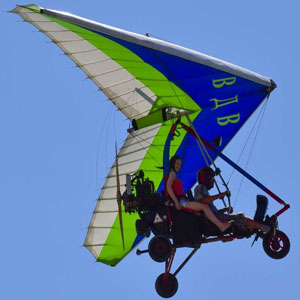
Microlight aviation offers a direct kind of freedom. In South Africa, the Civil Aviation Authority defines a microlight aircraft by its empty weight and performance. A typical two seater weighs no more than 450 kilograms and has a stall speed below 35 knots.
Here is what sets them apart:
- Light composite construction
- Open cockpit or small pod
- High maneuverability at low speeds
These features explain why so many pilots search for microlight flight near me. The aircraft respond instantly to input. You sense every thermal and gust. That tactile experience keeps enthusiasts returning for more flights!
Differences Between Powered and Unpowered Microlights
Powered or not, that choice defines your time in the air. Powered microlights use a motor for climb and cruise. Unpowered microlights, such as hang gliders, rely on rising air and gravity. One gives you range. The other gives you silence.
Before you book a microlight flight near me, understand what each offers:
- Powered trikes handle wind shifts and long trips.
- Unpowered wings demand strong thermals and a sharp eye.
The controls respond differently. A throttle changes altitude on demand. An unpowered wing waits for updrafts. That is the real difference. Know it before you go up.
Typical Duration and Distance of Introductory Flights
Thirty minutes in the air carries a strange weight. A typical introductory microlight flight near me lasts between 20 and 40 minutes, depending on weather and airspace. In that short window, you might cover 40 kilometers of coastline or farmland. The distance is real. The experience is compact.
Several factors shape your flight path:
- Wind direction and speed
- Local airspace restrictions
- The pilot’s chosen route
- Time of day and thermal activity
I have watched passengers land with quiet disbelief. They searched for a microlight flight near me expecting a brief thrill. Instead, they returned with a new sense of scale. The aircraft climbs steadily, but the horizon opens quickly. By the time you reach 2,000 feet, the landmarks below become a map. That is the gift of a short flight. It offers perspective without demanding a full day.
Safety Regulations and Pilot Licensing Requirements
South Africa’s Civil Aviation Authority applies the same regulatory weight to microlight operations as it does to commercial flying. Every pilot offering a microlight flight near me must hold a valid license issued under Part 62 of the regulations. That license requires a minimum of 25 hours of flight training, solo cross-country time, and a radio telephony examination.
The aircraft itself undergoes an annual inspection by an approved person. Maintenance logs must show strict compliance with manufacturer schedules.
- Pre-flight weather assessments are mandatory before every departure
- Passenger briefings cover weight and balance calculations
- Emergency procedures are rehearsed on the ground
Microlights are restricted to daylight operations in visual meteorological conditions. Specific airspace classifications demand additional endorsements. The licensing path is thorough, and it produces pilots who respect both their limits and the machine’s capabilities.
Physical Fitness and Weight Restrictions
Physical fitness in microlight aviation is not about athletic prowess. It is about honest self assessment. The seat is narrow. The cockpit is snug. Weight restrictions protect the aircraft’s centre of gravity and structural limits.
Most operators cap passenger weight around 120 kilograms. Combined pilot and passenger weight determines fuel load and flight performance. A heavier passenger might require a lighter fuel load or a different aircraft.
Before booking a microlight flight near me, confirm your weight with the operator. Be truthful. The pilot calculates performance based on your numbers. A discrepancy could affect takeoff distance or climb rate.
- Recent surgeries or injuries may disqualify you
- Heart conditions require medical clearance
- Vertigo or balance issues need discussion
- Pregnancy is typically excluded
The pre flight briefing for your microlight flight near me includes a weight and balance calculation. The pilot explains how your position affects the aircraft. Listen carefully. Your safety depends on it.
Discovering Local Flying Clubs and Certified Operators
Searching Municipal Airfields and Private Airstrips
South Africa has over a thousand registered airstrips, yet most microlight enthusiasts converge on a surprisingly small circle of clubs. Finding the right operator means understanding the local landscape, both social and geographical.
Municipal airfields are the traditional starting point. They host certified schools, maintain proper runways, and often serve as the launchpad for your first microlight flight near me. Private airstrips require more finesse. You may drive past a farm gate, spot a windsock, and realise you have found a hidden gem, but membership often depends on knowing someone who knows someone.
In my experience, a worthwhile club reveals itself through small details:
- The instructor introduces you to other pilots before the paperwork
- The hangar doors stay open during windless afternoons
- Tea breaks happen at a set time, and everyone attends
- The aircraft logs sit visibly open for inspection
These habits matter more than glossy websites. A club that values routine and transparency will treat your microlight flight near me with the same seriousness it treats its own. That standard turns a random search into a reliable choice.
Using Aviation Directories and Accredited Associations
Aviation directories remain the quiet backbone of this search. The Aeronautical Information Publication lists every licensed airfield, while the South African Civil Aviation Authority maintains a register of approved training organisations. Cross-referencing these sources filters out operators who lack proper certification.
Accredited associations add another layer. MISASA and the Aeroclub of South Africa publish member directories that favour established clubs over fly-by-night operations.
A few checks to run when scanning these records:
- Does the operator hold a valid Air Operator Certificate?
- Are the instructors registered with the relevant body?
- Does the club appear consistently across multiple directories?
This method turns a microlight flight near me into a verified choice, not a hopeful gamble. Associations also run safety audits and announce sanctions publicly, which gives you a paper trail before you ever phone the clubhouse.
Evaluating Online Reviews and Pilot Testimonials
Morning light over the Highveld often reveals a microlight flight near me before the engine turns over. Discovery happens inside hangars where pilots wipe oil from their fingers and talk about thermals. Local flying clubs welcome curious visitors. You will hear which instructors have steady hands and which aircraft pass every pre-flight check.
Certified operators earn reputations through consistency. Online reviews and pilot testimonials reveal what brochures omit. When scanning feedback, look for specifics. A reviewer who mentions crosswind landings writes from experience. Anonymous praise should not persuade you. A pilot’s name attached to a review carries weight.
- How long has the reviewer been flying?
- Do they mention actual routes or aircraft types?
- Are negative comments answered professionally?
These clues reveal the club’s character. The best testament is a pilot who returns on weekends simply to sit in the hangar. That quiet loyalty carries more weight than any advertisement.
Verifying Safety Records and Insurance Coverage
Finding the right operator for a microlight flight near me starts with a visit to the clubhouse, not the website. Certified operators keep their credentials visible. They answer questions about accident rates and maintenance schedules without hesitation.
Ask to see the safety documentation. A responsible club will show you:
- Annual inspection certificates
- Pilot licence and medical records
- Insurance policy with passenger liability
Insurance coverage is the quiet foundation of every flight. Without it, you carry the financial risk alone. Verify that the policy covers the exact aircraft you will fly. That detail matters more than the paint scheme or the charm of the instructor.
Comparing Pricing, Packages, and Experience Options
Standard Sightseeing Packages versus Custom Charters
Pricing for a microlight flight near me varies more than most people expect. A standard sightseeing package might cost R1,500 for 30 minutes. Custom charters start around R3,000, but they buy you flexibility.
You pay for time, fuel, and the pilot’s planning. Standard packages follow fixed routes. Custom charters allow detours, such as following the coast or circling a game farm. Some operators bundle extras.
- 30 minutes of extra airtime
- High definition action camera
- Spacious tandem cockpit
Check what each quote includes. A cheap rate may exclude landing fees or briefing time. Compare the total flight experience, not just the hourly cost.
Trial Lessons and Taster Sessions for Beginners
For beginners, choosing a microlight flight near me usually means comparing a taster session with a trial lesson. The taster is a short introduction, roughly 20 minutes of airtime, built around the sensation of flying. The trial lesson goes further. It includes ground school, dual controls, and basic manoeuvres under instructor supervision. The price gap matters when you compare a microlight flight near me across operators. Tasters start lower, but trial lessons bundle structure and feedback. Some schools apply the trial fee toward a full licence if you continue.
Ask what happens after you land. Look for these markers of quality:
- Pre-flight briefing materials
- Instructor debrief and logbook entry
- Discounted follow-up flights
These extras turn a short flight into a structured learning step. Decide based on whether you want a taste or a foundation.
Group Discounts and Gift Voucher Opportunities
Comparing operators for a microlight flight near me means reading beyond the headline price. South African flight schools each shape their packages differently. One rate might include a pre flight briefing, another adds a branded logbook. Group discounts surface when you book for four or more, a common approach for bachelor parties or family gatherings. Gift vouchers operate on their own logic. They allow the recipient to choose the day, which matters in this climate. I have seen vouchers sit for months, waiting for the Highveld wind to settle.
A voucher does not lock you into a route. It holds value, often for a full year. That flexibility is worth something.
Some extras appear consistent across operators:
- Passenger insurance per flight
- Headset hire and intercom use
- Photographic package from a wing mounted camera
The advertised microlight flight near me price rarely tells the whole story. Weigh the total cost, not the first number.
Hidden Costs Like Fuel Surcharges and Landing Fees
The quoted price for a microlight flight near me often excludes the quiet costs. Fuel surcharges appear when the avgas price climbs, and landing fees at private strips can add R150 to R300. Ask upfront!
Some operators fold these costs into a single rate. Others itemize them. The difference matters. Consider what the package actually contains:
- Pre flight weather briefing
- Instructor time on the ground
- Landing fee at the destination strip
- Fuel for the full route
Experience options vary too. A scenic hop over the Magaliesberg carries a different surcharge than a coastal run. When you compare operators, request a written breakdown. The advertised rate is a starting point, never the finish.
Policies on Weather Delays and Flight Rescheduling
Nobody enjoys dealing with weather delays. Yet rescheduling policies often appear in the fine print. When I compare microlight flight near me options, I ask how operators handle sudden storms. Some offer full refunds, others only vouchers. The same applies to experience packages. A scenic hop over the Magaliesberg differs from a longer coastal run, so request a written breakdown of what each rate includes.
Rescheduling policies vary as much as pricing. One operator lets you move your booking free of charge, another charges an admin fee. I always ask for these details in writing before paying:
- Voucher validity after a weather cancellation
- Deposit rollover conditions
- Notice period for voluntary changes
Your total cost per minute of flying time matters more than the advertised rate. Compare that across operators to find genuine value in a microlight flight near me!
Preparing for Your Microlight Adventure
Choosing the Right Clothing and Protective Gear
At 300 metres above the Highveld, the air temperature drops by roughly two degrees, a fact that surprises many flyers. Preparing for a microlight flight near me means dressing for the ground and for altitude, because conditions shift faster than you expect.
Layered clothing is the practical answer. I always advise clients to bring:
– A thermal base layer that wicks moisture
– A fleece or light jumper for insulation
– A windproof outer shell to block the slipstream
Closed shoes with solid grip beat sandals every time. The grass airstrip can hold morning dew, and the walk back after landing is easier with dry feet.
Sun protection remains essential. The Highveld sun burns through thin cloud, so bring UV rated sunglasses, apply high SPF sunscreen, and pack thin gloves. Most operators supply helmets and intercoms, but your clothing stays your responsibility. The checklist for any microlight flight near me starts with your own comfort.
What to Expect During the Pre-Flight Briefing
The pre-flight briefing prepares you for the flight ahead. Your pilot will walk you through the aircraft inspection, explaining each control surface and what it does. You will learn hand signals used on the ground, because engine noise makes verbal communication impossible during taxi.
Weather plays a central role in the briefing. The pilot will show you the wind sock and explain how crosswinds affect takeoff and landing. You will review the planned route on a map, identifying landmarks you will see from the air.
A typical briefing covers:
- Aircraft safety features and emergency procedures
- Intercom operation and how to speak to the pilot
- Camera handling during flight
- Seating position and weight distribution
By the end, you will understand what happens from start to touchdown. When you search for a microlight flight near me, ask about the briefing. Good preparation makes for a smoother flight.
Communicating Your Comfort Level and Preferences
Tell your pilot what makes you comfortable. When you book a microlight flight near me, speak openly about any concerns. Does turbulence worry you? Seek reassurance. Do you love crisp manoeuvres? Say so. The pilot shapes every turn and climb around your needs.
Pilots commonly adjust the following based on passenger input:
- Bank angle and turn sharpness
- Rate of ascent or descent
- Proximity to other aircraft
- Duration of the experience
Your honesty prevents surprises. A calm passenger enjoys the views far more. Communicate your preferences in plain words, and the flight proceeds exactly as you wish.
Bringing Cameras or GoPros: Permissions and Safety
Capturing the view from a microlight flight near me sounds essential, but not every operator permits personal cameras. Some worry about loose items interfering with controls. Others have specific mounting rules. Ask your pilot before takeoff. Do not assume your GoPro is welcome. I have seen cameras become hazards in flight.
Common policies include:
- Harness or wrist mounts only
- No handheld devices during takeoff and landing
- A pre-approved list of mounting points
- Mandatory tether straps for all equipment
The safest approach is a chest strap or a helmet mount secured with a lanyard. Loose cameras become projectiles. If the operator supplies a wing-mounted unit, use theirs. Their gear is tested and insured. Your phone’s stabilisation matters less than basic safety. When you book a microlight flight near me, verify photography rules, and you will return with footage instead of regrets.
Medical Considerations and Motion Sickness Tips
Your body responds to flight in ways you cannot predict. Motion sickness affects even seasoned passengers, and the gentle sway of a microlight amplifies it. Eat a light meal two hours before departure. Avoid heavy, greasy foods and carbonated drinks. Hydrate steadily, but do not overdo it.
Medical conditions like hypertension or inner ear disorders deserve a conversation with your doctor beforehand. Pilots will ask about epilepsy, heart conditions, and recent surgeries. Answer honestly. A microlight flight near me requires physical and mental readiness.
Consider these preparations:
- Take motion sickness medication only if your doctor approves
- Focus on the horizon during flight
- Keep your head still and breathe deeply
- Inform your pilot immediately if nausea builds
Your pilot can adjust the flight path or return early if needed. There is no shame in aborting.
Arriving Early: Documents, Waivers, and Check-In
Arriving a full hour before your scheduled slot transforms a rushed morning into a calm prelude. The check-in desk at a microlight flight near me operates on precise timing, and early arrival gives you room to breathe. You will need a valid ID, your booking reference, and a signed waiver. The waiver covers inherent risks, so read each line before signing.
Here is what the ground crew typically checks:
- Identity verification against the booking manifest
- Weight declaration to confirm the aircraft’s balance
- Next of kin contact details for the flight log
After the paperwork, a staff member walks you to the holding area. Use those extra minutes to watch other landings. That quiet observation often settles nerves more effectively than any reassurance.
Making the Most of Your Flight and Beyond
Best Times of Day for Scenic Views and Smooth Air
At dawn, the Highveld air sits glassy, and the light throws long shadows across the Magaliesberg. This is the window when a microlight flight near me reveals its finest clarity. What a way to start the day!
Turbulence builds as the day warms, so pilots often schedule early sorties for that silky feel. On the coast, the afternoon sea breeze creates a different rhythm. I have learned to ask operators about their local wind patterns; each field has its own quirks.
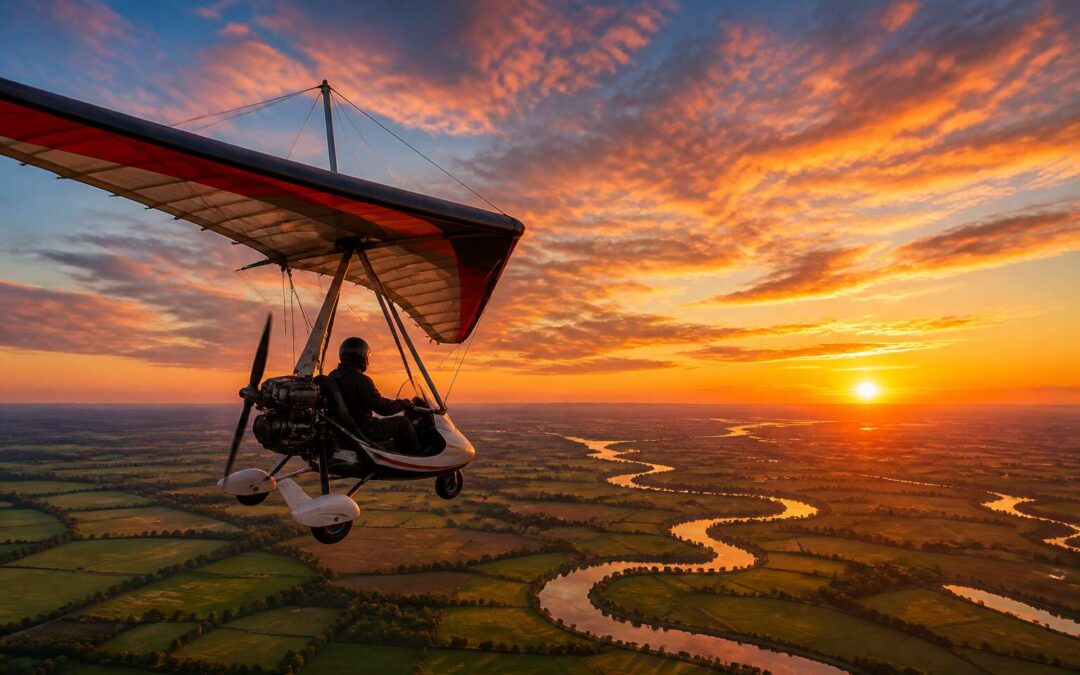
Golden hour offers dramatic colour, but it can also bring stronger thermals. Choose your moment based on what you value more. Half an hour before sunset, the world turns amber, yet the air may grow choppy. The skilled instructor will balance these factors for you.
Interacting with Your Pilot During the Flight
Once the engine settles into its rhythm, the microphone in your headset becomes your best tool. I have learned that querying the pilot about what lies below enriches a microlight flight near me. They know where the old mining shafts hide and which hills catch afternoon shadows.
Non-verbal signals work better than raised voices. A tug on the harness means you want attention. Pointing with a flat hand, not a finger, helps the pilot identify a feature without sudden movement. Save questions for straight flight paths, because turns require their full concentration. Useful mid-air queries include:
- How high above the river are we?
- What caused that dark band in the rock face?
- Is this the quiet route you mentioned earlier?
Capturing Memorable Photos Without Distractions
The temptation to document everything can steal the actual experience. I have noticed that passengers who fly with us in South Africa recall more detail when they leave the camera in the seat pocket. A microlight flight near me demands your full attention. The landscape shifts every few seconds, and the pilot offers commentary that matters.
- Listen first. The pilot will name the mountains and rivers as they appear.
- Look for the textures in the fields below. They tell you about wind direction.
- Only then reach for the camera, if you still feel the need.
Photographs cannot capture the full experience. The memory of the air on your face and the sound of the engine stays longer. Choose that instead. When you look for a microlight flight near me, you are searching for a feeling that no picture can reproduce.
Understanding Post-Flight Debriefing and Feedback
The flight ends, but the experience does not. After landing, your pilot will walk you through what you just saw. This debriefing is your chance to ask questions. Why did we turn over that ridge? What caused that dust plume? The answers deepen your understanding.
Feedback matters too. Your observations help the pilot refine future flights. If the seating felt awkward, say so. If the commentary was too fast, mention it. Most pilots welcome honest input. It improves the operation for the next person searching for a microlight flight near me.
- Ask about landmarks you missed during the flight.
- Request the flight path or route details.
- Share what felt unclear in the pre-flight briefing.
Take a moment after the debrief to let it settle. The quiet afterwards holds as much value as the noise of the climb. A microlight flight near me gives you a conversation with the sky. The debrief closes that conversation properly.
Pathways to Becoming a Certified Microlight Pilot
To make the most of your flight, give yourself over to the moment before takeoff. Scan the horizon with the pilot’s eyes. Ask which thermal, which ridge, which tailwind will carry you. A microlight flight near me becomes more vivid when you name what you want to see.
If you want to keep flying, the pathway to certification is open. South African training schools offer graded licences, from learner to full pilot. Each logged hour builds a different kind of awareness.
- Complete your student pilot permit
- Log dual instruction hours
- Fly solo under supervision
- Pass the flight test
Then the microlight flight near me you once booked becomes the one you pilot yourself.