Understanding Microlight Aircraft Regulations in the USA
FAA Rules for Light Sport Aircraft
The FAA’s Light Sport Aircraft rules occupy a curious middle ground between ultralight toys and certified machines. When you begin hunting for microlight aircraft for sale usa, these regulations quietly determine everything from seat count to engine size. Most South African pilots find the American system refreshingly direct.
Under the LSA banner, a two seater with a fixed pitch propeller and a stall speed under 45 knots fits neatly. The gross weight ceiling sits at 600 kilograms for aeroplanes, which explains why these aircraft handle so lightly. The FAA also lets a valid driver’s licence substitute for a medical certificate, a gesture of trust that still surprises foreign pilots.
- Maximum speed at full power: 120 knots
- Fixed pitch propeller only
- No more than two occupants
That combination keeps the category simple. For anyone scanning the American market from Cape Town or Johannesburg, the LSA framework offers clarity, even if the paperwork takes time.
Weight and Speed Limits for Microlights
One hundred and fifteen kilograms. That is the entire empty weight allowance for an ultralight under FAA Part 103, and it disappears faster than most pilots expect. Speed limits press just as tightly. Maximum level flight hits 55 knots and stall speed caps at 24 knots. Cross any of those figures and your aircraft legally becomes something else. The rulebook demands:
- Empty weight cannot exceed 115 kilograms
- Maximum level flight speed stays at 55 knots
- Stall speed must not exceed 24 knots
- Only one occupant is permitted
For a South African buyer, the consequence is clear. Trust me, these numbers will change your shopping list. When you scan the market for microlight aircraft for sale usa, the specifications in each listing are not vague marketing figures. They are legal definitions. A machine that slips past the ultralight envelope requires registration, an airworthiness certificate, and a pilot with the right credentials.
Pilot Certification Requirements
Few buyers realize that most machines listed as microlight aircraft for sale usa do not require a pilot certificate at all. Under FAA Part 103, an ultralight pilot needs no license, no medical exam, and no logbook. That freedom evaporates the moment the machine crosses the legal envelope. A heavier or faster aircraft instantly demands a Sport Pilot certificate, a minimum of 20 hours of flight time, and a valid driver’s license as proof of fitness.
The South African buyer faces a hidden complication. Certifications earned in the USA do not transfer automatically. A locally rated pilot must verify reciprocity with the South African Civil Aviation Authority before flying an imported machine. The sequence matters:
– Confirm FAA Part 103 compliance or obtain the correct certificate
– Verify SACAA recognition of US pilot credentials
– Check import duty and registration timelines
Each item carries its own delay. Each delay costs money.
Registration and Airworthiness Standards
Most online listings for microlight aircraft for sale usa omit a crucial detail: whether the machine carries a valid registration or an airworthiness certificate. The FAA does not require either for a true Part 103 ultralight. That simplicity vanishes once the aircraft exceeds the legal limits or the buyer intends to fly internationally. I have watched buyers walk away from otherwise perfect machines because the paperwork failed.
South African buyers face three documentation questions:
- Whether the seller holds a bill of sale
- Whether the aircraft has a data plate
- Whether import documentation matches the serial number
The SACAA treats a US registered aircraft differently from an unregistered ultralight. Airworthiness standards follow the country of origin, but local acceptance depends on proof. Without that proof, the machine remains unairworthy. For anyone scanning microlight aircraft for sale usa, registration status determines everything that follows.
Types of Microlight Aircraft Available
Fixed-Wing Microlights
Fixed-wing microlights are the sensible rebels of the aviation world. They offer unfiltered flight without a pressurised cabin or autopilot, and they demand your full attention. For pilots combing through microlight aircraft for sale USA, the choice rarely comes down to luxury. It comes down to character.
These machines split into two categories with distinct temperaments. Strutted wings are forgiving and calm, quite at home on rough grass strips. Cantilever wings are quicker and sleeker, but they watch your every input like a strict driving instructor.
– Strutted models tolerate heavy-handed control and bumpy landings.
– Cantilever designs reward smooth handling and precise coordination.
Every pilot has a favourite, which guarantees arguments at any airfield. The only rational approach when reviewing microlight aircraft for sale USA is to match the wing to your own habits on the ground and in the air.
Flex-Wing Trikes
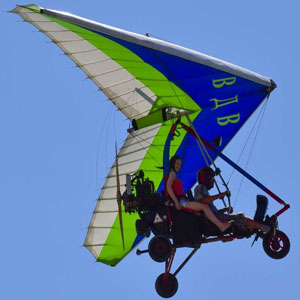
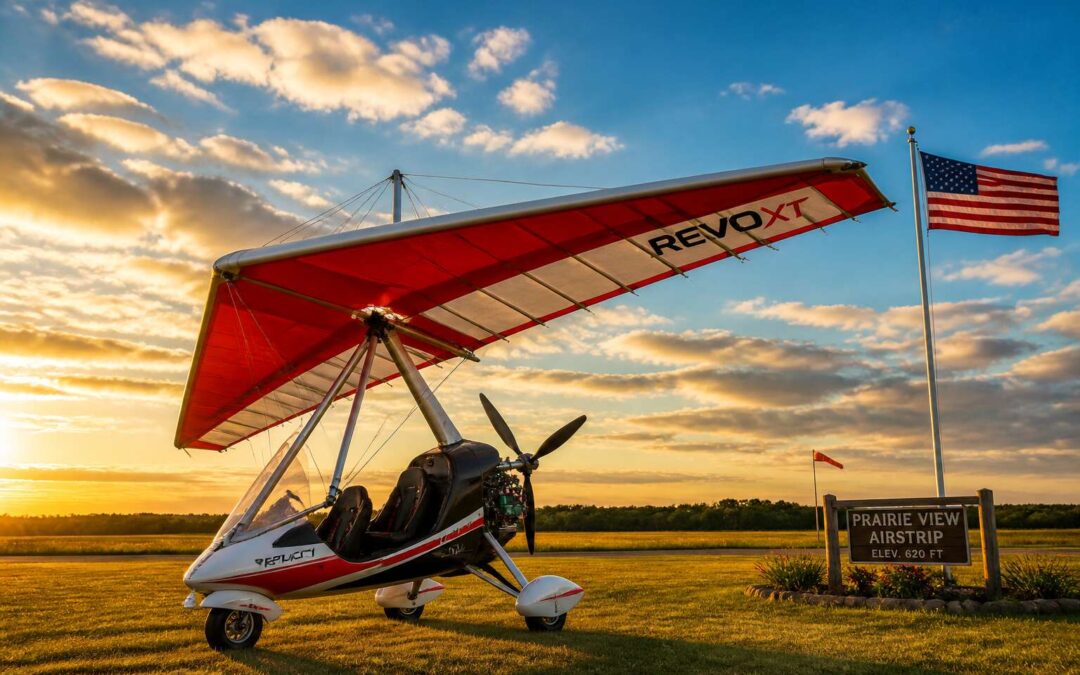
There is no fuselage to hide inside a flex-wing trike. You sit in the open, under a wing that moves with your body, not against it. This is weight-shift control, and it changes the moral contract of flight. In a fixed-wing, you command the machine. In a trike, you become the machine. The wing reads your lean, your balance, your hesitation.
For pilots reviewing microlight aircraft for sale USA, trikes are the purest expression of vulnerability. They do not forgive absent-mindedness. They reward those who accept the wind as a partner, not an obstacle. The experience is raw, loud, and honest. Some find it uncomfortable. Others find it liberating.
- Trikes offer exceptional visibility, with no wing above your head.
- They are simpler to maintain, with fewer moving parts in the control system.
- Their slow-speed handling suits pilots who value feeling over precision.
That simplicity carries a cost. The wing is a sail, and the sail responds to turbulence. You must stay present. This is not a machine for passive pilots. It is a machine for those who want to remember that flight is a physical act, not a digital convenience.
Powered Parachutes
Powered parachutes replace speed with a different virtue. The wing is a fabric canopy that inflates only after thrust gets you moving. No rigid structure, no ailerons, no control cables running to wing tips. You steer with pedals pulling brake lines, which distorts the canopy’s trailing edge.
These aircraft cruise near twenty five knots, with a gentle rocking motion over thermals. Stall behavior is forgiving, but wind gusts remain a real concern. They demand constant attention to current conditions.
- Preflight checks focus on lines, risers, and canopy fabric
- Launch needs a clear, straight strip, but length is generous
- Landing approaches are steep,with minimal ground roll
Evaluators browsing microlight aircraft for sale usa will notice that powered parachutes occupy a niche for those who prioritize simplicity over speed. The experience is tactile, immediate and unapologetically slow.
Gyrocopters
The gyrocopter demands respect. The rotor overhead spins not from an engine, but from the force of the air itself. That free-spinning disc generates lift through autorotation, a phenomenon that requires forward motion. Stop moving, and the rotor stops forgiving.
A gyrocopter is not a helicopter. It cannot hover. I have watched pilots treat them with an almost religious respect. They push with a rear propeller, while the rotor turns with eerie calm. The flight is slow and deliberate, closer to sinking than climbing. The thrum of the blades stays with you long after landing.
When you browse microlight aircraft for sale usa, gyrocopters stand apart. They are not toys. The unloaded rotor can tuck under in a moment of carelessness. You fly them with a light hand and a heavy sense of consequence.
Kit-Built vs Ready-to-Fly
Every aircraft requires trust. The kit trusts you to build it correctly. The ready-to-fly trusts a factory you have never met. When you browse microlight aircraft for sale usa, this distinction shapes the entire experience.
The kit forces you to learn each bolt, each cable, each flaw. The ready-to-fly machine hides those details. It arrives complete, leaving you to discover its behaviour in flight, not in construction. For those comparing microlight aircraft for sale usa, the question is not which is safer, but which kind of ownership you can accept.
Neither path is superior. The kit rewards perseverance. The ready-to-fly rewards decisiveness. Some pilots need to build before they can trust. Others trust immediately. Both are valid, but they are not the same.
Where to Find Microlight Aircraft for Sale in the USA
Online Marketplaces and Classifieds
One idle evening on a major classifieds site, you can spot a low-hour machine listed for less than a family SUV. That is the reality of the used market. A focused search for microlight aircraft for sale usa pulls up everything from open-air singles to enclosed touring models.
The biggest platforms let you sort by engine time, airframe condition, and distance from a chosen airport. Private sellers often upload dozens of photos and maintenance records. This makes cross-country price comparisons straightforward.
- Barnstormers remains the busiest online marketplace for light aviation.
- Trade-A-Plane carries a steady mix of aircraft and spares.
- Aviation-specific Facebook groups host regional sellers who avoid the big sites.
For a buyer working from South Africa, watch these listings closely. They refresh hourly. Save a search for microlight aircraft for sale usa on two or three platforms, because the best deals rarely linger beyond a week.
Aircraft Dealerships and Brokers
Dealers and brokers operate differently from classifieds. A broker acts as your agent, scouring hangars for a microlight aircraft for sale usa that matches your logbook and your wallet. Dealerships hold inventory, often with fresh annuals and new tyres. Both charge a premium, but they reduce risk for a buyer in Johannesburg or Cape Town who cannot fly to Ohio at short notice.
A good broker will:
- Verify the airframe’s history with the FAA.
- Arrange a pre-purchase inspection.
- Handle deposit escrow.
Their fees look steep until you price a missed defect. For serious buyers, that cost is simply the price of certainty.
Aviation Forums and Community Groups
Online forums are the drawing rooms of aviation, where reputation travels faster than a Cessna on a tailwind. When someone lists a microlight aircraft for sale usa, the conversation around it often tells a truer story than the photos do. I have watched owners answer tough questions with grace, and seen others deflect with the elegance of a politician caught mid-scandal. The difference is visible in minutes.
A classified ad gives you the price. A forum thread gives you the owner’s temperament, which matters when you are buying something built by hand. You can follow a seller’s past posts about maintenance, modifications, and mishaps. That record is worth a thousand pre-purchase checklists.
Useful spaces for this research:
- PilotsofAmerica forums, where microlight owners gather and grumble beautifully.
- HomebuiltAirplanes, strong on technical detail and occasional drama.
- Regional Facebook groups, especially those tied to flying clubs in Florida or Arizona.
Community groups also connect you to mechanics and instructors who know specific airframes. Their opinions on a microlight aircraft for sale usa can save you from a costly infatuation. I have found that a short, polite post asking for local advice produces better leads than weeks of cold browsing. People enjoy being the expert. Let them.
Auctions and Government Surplus
I have attended three government auctions and each taught me patience. The most surprising lesson came from a GSA lot that looked empty until the auctioneer pulled back a tarp and revealed a tired but complete flex-wing trike. Most attendees come for trucks and office furniture, which means fewer eyes on the aircraft.
Watch GSA Auctions, the FAA’s public surplus listings, and county sheriff sales in states like Texas and Colorado. Bankruptcy liquidations from flying schools also appear regularly on auction platforms.
Three realities before bidding:
- Inspect personally or send a mechanic; photographs lie comfortably.
- Government surplus rarely includes logbooks or maintenance records.
- Factor in transport costs, since these machines rarely sit near an airport.
A microlight aircraft for sale usa through auction rewards the buyer who checks the paperwork and sticks to their limit. The bargain exists, but only for those willing to dig.
Local Flying Clubs and Events
Flying clubs hold a different kind of inventory. Walk into a clubhouse on Saturday morning and you will hear engines being discussed alongside coffee. The trike in the corner often has a story and a price tag. I found my best aircraft this way, through a bulletin board notice and a handshake.
Fly-ins and regional rallies matter just as much. Pilots trailer their machines for hundreds of miles to attend. These gatherings create a live market where a microlight aircraft for sale usa gets evaluated on grass strips and in real crosswinds. The crowd tends to gather around any new arrival, which means owners expect questions.
A few starting points:
– United States Ultralight Association chapter meetings
– EAA chapter pancake breakfasts and hangar days
The people at these events maintain their own aircraft. They can recite the full history of a machine, from the original kit to the latest repair. Conversation reveals what photographs never will.
Key Considerations When Buying a Used Microlight
Airframe and Engine Condition
The most expensive part of a bargain aircraft is often the engine. Buying a used microlight aircraft for sale usa demands inspection of two components: the airframe andthe engine. Determine airframe integrity first, then engine reliability. Both require scrutiny or expect financial pain later.
Inspect the airframe for corrosion at welds and attachment points. Check fabric fortears, sun damage, orresealed patches. Improper repairs end the deal. For the engine, hours matter less thanmaintenance history. A low-time engine that sat idle can be trouble. Verify logbooks against service intervals.
- Run a compression test on each cylinder
- Examine fuel lines for cracks or leaks
- Inspect exhaust for soot or oil residue
A used aircraft offers savings, but only if both pass muster. Someone else can inherit headaches.
Maintenance Logs and Inspections
When you search microlight aircraft for sale usa, the logbook carries the answer. Missing entries, inconsistent signatures, and dates that do not align with repair orders should end the conversation. A properly signed inspection record holds more value than a fresh coat of paint.
Review the airworthiness directive compliance records. A seller who cannot produce the original authorization for a major repair is hiding something. Look for 100-hour or annual condition inspections that follow a rhythm. The maintenance pattern reveals how the owner treated the machine.
- Check for oil change intervals that align with calendar time, not just flight hours
- Verify that each repair matches the manufacturer’s approved procedures
- Cross reference logbook dates against the aircraft registration renewal cycle
A clean paper trail is rare. Most used microlights have gaps, stains, or rushed entries. Those gaps align with expensive surprises, especially when you shop microlight aircraft for sale usa.
Corrosion and Damage History
Corrosion is the slow killer. It grounds more microlights than mechanical failure ever will. When you search microlight aircraft for sale usa, the real examination begins under the paint. Look at the aluminium near the battery box, the steel in the tailcone, and the magnesium in the wheel castings. These are the first places to surrender.
Damage history is a story of stress. A wing that has cartwheeled once will never carry a load the same way again. The repair might look perfect, but the fatigue map is permanent.
- Surface blisters that weep white or grey residue.
- Flaking around rivet lines that suggests movement.
- Mismatched primer tones revealing patched sections.
A seller who shrugs at these details has already told you everything.
Total Cost of Ownership
Sticker prices are seductive, but they never tell the whole story. When you search microlight aircraft for sale usa, the real cost of ownership reveals itself over time. It lives in hangar fees, insurance, annual condition inspections, and the deterioration of rubber hoses and fuel lines. A bargain airframe can become a serious financial drain within months if you ignore these numbers.
Most buyers build their budget around the purchase price alone, yet the recurring expenses stack up quickly:
- Hangarage or tie-down fees
- Engine overhaul reserves
- Insurance based on your flight hours
- Consumables like brake pads and tyres
I’ve watched pilots admire a clean cockpit while the engine sat two hundred hours past its recommended TBO. The purchase price only begins the financial commitment. Next time you browse microlight aircraft for sale usa, ask about the hourly operating cost. The seller who quotes that figure without flinching has already made peace with the real price of flight.
Test Flight and Pre-Purchase Inspection
The test flight is where promise meets reality. A pre-purchase inspection confirms the airframe is sound, but only airborne time reveals how a machine behaves. When you browse microlight aircraft for sale usa, a seller’s description fades quickly at altitude.
During the test flight, pay attention to control response and stability. A well-rigged aircraft flies hands-off for a few seconds. It tracks straight on takeoff and lands predictably. Engine acceleration should be smooth, without hesitation or rough spots. A subtle vibration or odd noise will amplify after purchase.
The inspection covers what the test flight cannot:
- Control cable tension and pulley wear
- Fuel tank integrity and fuel line condition
- Propeller condition and track
- Undercarriage bushings and attachment points
An independent inspector with Light Sport Aircraft experience finds issues that escape untrained eyes. When comparing microlight aircraft for sale usa, the test flight and inspection form a continuous evaluation.
Financing and Insurance for Microlight Aircraft
Loan Options for Light Sport Aircraft
Financing a microlight in the USA is simpler than most South African buyers expect. American credit unions and aviation lenders treat light sport aircraft as a distinct category, and loan terms reflect the lower price point. A used trike or fixed-wing machine can qualify with a modest deposit if the logbooks are current.
Insurance is the quieter puzzle. Underwriters consider your total flight time, ratings, and home airfield when pricing hull coverage. For a buyer importing a microlight aircraft for sale usa, the premium shifts depending on whether the machine is flown under Part 103 or as a light sport aircraft. Some carriers demand a tailwheel endorsement before issuing liability cover.
When you shop for a loan, structure matters more than the rate. Consider these points:
– The loan-to-value ratio on a kit-built versus a factory-built airframe.
– Whether the lender will hold a lien on an FAA-registered aircraft.
– The repayment window, which is usually shorter than a car loan.
– Whether the insurer requires a named pilot.
Insurance Requirements and Premiums
Insurance underwriters have a peculiar fondness for pilots with logbooks full of cross-country trips. Buying a microlight aircraft for sale usa from a dealer in Florida does not impress them. They want to see your total flight time, the condition of your hangar, and whether your home airfield has a paved runway or a cow pasture.
- Hull coverage premiums often triple for owners who keep trikes tied down outdoors.
- Some carriers require a named pilot with a minimum of 100 hours in category.
- Liability policies may exclude passengers if you fly a powered parachute.
A clean hangar and a current medical certificate will not lower your premium, but they will keep the underwriter from smirking when your application reaches their desk. The real pricing battle begins when you explain that your microlight aircraft for sale usa import has a folding wing. Expect questions, maybe a phone call, and certainly a survey.
Storage and Hangar Costs
Few buyers of a microlight aircraft for sale usa calculate hangar fees before they sign. That is a mistake. Storage can eat as much as fifteen percent of your annual operating budget. In South Africa, coastal humidity attacks fabric and untreated steel with a persistence that border on malicious.
Financing a microlight often requires a storage plan. Some lenders demand proof of a hangar before they release funds. Others will factor the monthly fee into your debt service ratio. The underwriting desk cares less about the aircraft and more about whether you can shelter it.
- T-hangar rental at a municipal airfield, often the safest and priciest option.
- Community hangar sharing, which splits cost but not risk.
- Shade port or “carport” storage, cheap but still open to windblown dust.
Your premium for hull insurance drops considerably when the trike sleeps indoors. A covered storage arrangement is often the cheapest single upgrade to your ownership risk profile.
Resale Value and Depreciation
Depreciation on a microlight is steep in the first two years. In South Africa, a flex-wing trike loses 30% of its value before the engine reaches 100 hours. That fact should shape financing choices!
Lenders underwrite against collateral. They calculate the loan-to-value ratio based on a book that lags reality. If you finance a microlight aircraft for sale usa with a five year term, you might owe more than the machine is worth by year three. Negative equity locks you into the asset, reducing your flexibility to upgrade or exit.
Insurance premiums reflect risk of total loss. A crash writes off the aircraft, and the payout is based on agreed value, not market value. Choosing a higher excess or a proven maintenance schedule can lower premiums, but it also affects the recorded history that a future buyer will scrutinize. These variables, not the purchase price, determine your resale position.