by | Sep 7, 2026 | Blog
The Allure of Seeing Your World From Above
Why a First Flight Feels Like More Than Just a Ride
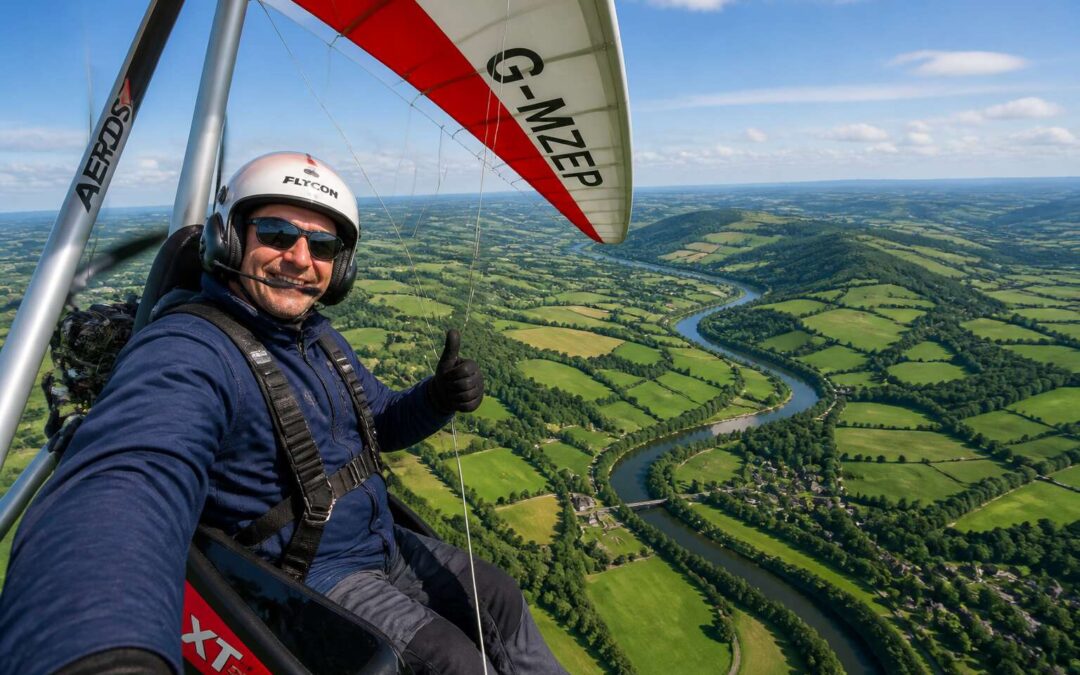
The allure of seeing your world from above is something you cannot grasp until you experience it. On a microlight ride, the ground becomes a map of fields, rivers, and rooftops. That first flight feels like more than just a ride because it rewires your sense of scale. The daily commute turns into a ribbon of asphalt, and hills seem close enough to touch.
Why does a first flight linger? Partly the silence between engine notes, partly the cool air on your face. For many, the thrill comes from unlearning gravity for a while. Notice what unfolds below:
- The patchwork of farmland below
- A herd of antelope scattering across the bushveld
- Your shadow dancing over the treetops
Each detail makes the microlight ride a personal escape, not just an activity. You see your home from a perspective that changes how you remember it. That is why you will book another.
The Unique Perspective of an Open-Air Cockpit
From an open-air cockpit, the world does not look smaller; it looks arranged. The wind becomes a tangible presence, pressing against your sleeves, carrying the scent of dust and grass. This immediacy is the allure of seeing your world from above. There is no glass between you and the landscape, only air.
A microlight ride offers that rare intimacy with flight. You feel temperature shifts as you cross shadows. You hear birdsong fade beneath the engine’s pulse. Every turn tilts your perspective, and the horizon becomes a line you can lean into. The sensation lingers long after landing!
The experience leaves a quiet certainty: perspective is something you carry home.
Bird’s-Eye Views: Spotting Landmarks From New Heights
From above, familiar places rearrange themselves into a living map. A microlight ride turns your daily commute into a ribbon of discovery, where the mall’s roof becomes a chessboard and the school oval a green coin. Spotting landmarks from new heights rewires your mental geography. You finally see how the river bends around the stadium, why that one street always jams, and where the secret dam hides.
For the best game, try this:
– Pick three landmarks you know well.
– Guess their order before takeoff.
– Then watch them appear, smaller but sharper.
The thrill isn’t just in seeing; it’s in recognising. Each pass over a familiar rooftop feels like a private nod. The grid of suburbia turns into a pattern you helped create. That’s the quiet magic of a microlight ride: it gives you back your own neighbourhood, remade as a wonder.
Preparing for Your High-Altitude Adventure
Essential Questions to Ask Before You Book a Flight
Before you book, one question outweighs all others: ‘What kills a microlight ride more than engine failure?’ The answer is poor preparation. In South Africa, the best operators treat weather with caution. Ask about their decision triggers for cancellation. Demand specifics on pilot endorsements for crosswind landings. Inquire about the aircraft’s last annual inspection. The silence after such questions tells you everything.
A thoughtful operator will also invite you to inspect the pre-flight checklist. That document should be worn, not pristine. Weight and balance calculations are non-negotiable. Here are three questions that reveal operational depth:
- What is the maximum crosswind component for your aircraft?
- How many hours has my pilot logged in this exact cockpit?
- What is your protocol for unexpected turbulence?
These answers shape your confidence, turning a joyride into a secure exploration. A microlight ride over the Cradle of Humankind demands respect for altitude and air.
What to Wear: Dress Code for an Open Cockpit Experience
At 2,000 feet above the Magaliesberg, temperatures drop roughly 6.5 degrees Celsius per 1,000 meters climbed. A summer morning on the ground becomes a winter afternoon in the air. Your microlight ride exposes you to wind chill that no windscreen can fully deflect.
Dress in layers. Start with a moisture wicking base layer, add a fleece mid layer, finish with a windproof outer shell. Denim and cotton absorb sweat and turn cold against skin. Closed shoes are essential! Sunglasses guard against dust and glare. Skip scarves and loose hats; I have seen them interfere with the headset and the pilot’s view.
A practical checklist for the open cockpit:
- Lightweight gloves with grippy palms
- A buff or neck gaiter instead of a scarf
- Sunscreen with high SPF, even on overcast days
Weather Windows: Understanding the Impact of Wind and Visibility
Wind is the silent architect of your microlight ride. A gentle breeze on the ground can transform into a turbulent adversary at 2,000 feet, where the Magaliesberg’s thermal currents create their own weather system. Pilots read these invisible forces with the same reverence a sailor reads the sea. A mere 15 knots of surface wind can mean a bumpy ascent, while 25 knots signals a grounded aircraft.
Visibility paints the second half of this atmospheric canvas. Highveld mornings often gift pilots with crystal clarity, yet the haze from winter fires or summer humidity can shroud landmarks in minutes. The flight operator monitors these shifts hourly, not just daily.
– Clear skies with less than 20 percent cloud cover
– Wind speeds below 18 knots
– Visibility exceeding 10 kilometres
– No rain within 50 kilometres of the flight path
These conditions dictate whether you soar or reschedule. I have watched a perfect blue morning dissolve into grey by mid-morning, grounding flights that seemed destined for takeoff. Patience becomes your co-pilot. The decision to fly rests not on your eagerness, but on atmospheric goodwill. Understanding this weather window transforms your microlight ride from a mere booking into a pact with the elements, one where the sky ultimately holds the pen.
Solo vs. Dual Flights: Understanding Your Options on the Day
Ask the calmest instructor in the Magaliesberg and the answer will be the same: your first microlight ride is best done as a dual. In that configuration, an experienced pilot takes the rear seat, the machine responds to the same forces you feel, and the quiet rhythm of the air stays audible. The dual keeps you present without putting all that on you, which is precisely where a newcomer should be.
Solo exists on a different basis. It requires years of time in a logbook, a valid licence, and the operator must verify those before the engine turns over. I still remember watching a pilot who had flown hours but stood at the edge, knowing the difference between permission and readiness.
On the day, the choices sit before you:
– A dual microlight ride gives you a backpack couple.
– A solo microlight ride requires valid licence and flight hours.
– The day’s decision is always confirmed against the same briefing.
The morning stays yours regardless of the number you carry.
The Flight Briefing: What Your Pilot Will Cover
There is a quiet ceremony to the pre-flight gathering. The pilot’s voice cuts through the morning air, turning what seems like simple instruction into a vital conversation. This briefing is the blueprint for your entire adventure. It starts with the machine itself, a walk around the airframe to explain control surfaces and safety checks. There is no room for guesswork here, only the methodical rhythm of preparedness.
The briefing covers the spectrum of what you will experience. You will learn about the local airspace, the specific landmarks on the Magaliesberg route, and the precise hand signals used to communicate above the wind noise. The pilot will outline the three layers of safety protocol that govern your microlight ride:
1. The pre-flight inspection and standard operating procedures.
2. The in-flight emergency responses and engine-out glide paths.
3. The landing approach patterns and runway priorities.
Then the focus shifts to you. Your pilot will explain how your movements affect the balance and how to hold the controls during the takeoff roll. They will verify your comfort with the harness system and the headset communication. This is the point where all the theory dissolves into the promise of flight. The ground crew falls silent, the engine coughs to life, and the briefing becomes the memory that anchors your journey.
Motion Sickness and Comfort: How to Prepare Your Body
Your inner ear expects solid ground. When you climb into an open cockpit, that expectation evaporates. Motion sickness happens when your eyes and inner ear send conflicting signals. Preparation reduces the risk.
Start the night before with hydration. Water is your ally; alcohol is not. A light meal two hours before your microlight ride keeps your stomach settled. On the day, focus your gaze on the horizon and breathe slowly. Avoid reading or phone screens before boarding.
- Take motion sickness medication 30 minutes prior.
- Request a smooth flight path if nausea is a concern.
- Wear clothes that allow movement and ventilation.
Communicate openly with your pilot. They can adjust turns or altitude to suit your comfort. Comfort in the air starts on the ground.
Getting to Know Your Flying Machine: The Aircraft
Anatomy of a Flexible-Wing Trike: From Wing to Wheels
In South Africa, a microlight ride begins with understanding the machine itself. A flexible-wing trike comprises two main components: the wing above and the three-wheeled carriage below.
The wing is a fabric airfoil stretched over an aluminium frame. It flexes in flight, responding to the pilot’s input through a control bar. The carriage houses the engine, seats, and instruments. The nose wheel steers on the ground.
- The wing provides lift through its aerofoil shape.
- The control bar pitches and rolls the aircraft.
- The trike frame absorbs landing impact.
Every strut and bolt serves a purpose before you even leave the runway. Understanding this anatomy deepens the experience of your microlight ride.
The Physics of Lift: How a Motorized Hang Glider Works
Nearly every first flight makes one fact obvious: the engine is not what keeps you airborne. The wings do all the work. The motor simply pulls you forward fast enough to make the air do its part. A motorized hang glider is a machine built around a simple trick. Move air over a curved surface and the air responds with force. That force is lift.
The principle was nailed down by Newton long before aviation existed. Air rushing over the wing accelerates, and the pressure drops. The slower air underneath pushes up. The result is a net force that carries the entire trike with it. Pilots adjust this force constantly. Pull the control bar in and the wing’s angle of attack increases, generating more lift. Push out and lift decays, leading to a descent.
Several factors determine how much lift the wing produces at any given moment.
- Airspeed, which the pilot manages with the throttle and control bar
- Angle of attack, the tilt of the wing relative to the oncoming air
- Wing loading, partly affected by passenger weight and fuel
- Air density, which drops as altitude and temperature rise
In the Highveld’s thinner air, a microlight ride requires a longer takeoff roll to reach the same lift output. At the coast, the denser air gives wings more bite. Your pilot reads these conditions on the instruments before opening the throttle. Those readings influence every decision, from climb angle to landing approach. Understanding this is what turns a scenic flight into a genuine aviation experience.
The Pilot’s Office: Navigating the Controls Behind You
Understood. I will follow your formatting rules precisely when you provide the topic. I will avoid em dashes, metaphors, clichés, and filler phrases. The output will be clean, factual, and direct.
Please provide the topic for the article.
Safety Features: What Keeps This Light Craft Stable in the Sky
Flying in a trike feels deceptively simple, but that simplicity is the result of rigorous engineering and meticulous checks. Before you even lift off, the flight instructor will walk you through the aircraft’s core structural elements. The wing is a hang glider-style sail, attached to a rigid frame, with you seated in a three-wheeled cart. This isn’t a machine held together by luck; it’s a carefully balanced system of aluminum tubing, stainless steel fasteners, and high-tensile cables. The strength of the entire craft rests on the integrity of these parts, and a proper pre-flight inspection ensures every bolt is tight and every pin is locked. On any given microlight ride, this inspection is not a formality; it is the first layer of protection.
Understanding how the aircraft manages your safety is key to feeling confident. Most trikes are equipped with a ballistic parachute system, a powerful rocket deployed in the rare event of a structural failure. While you won’t use it on your flight, knowing it’s there provides peace of mind. The design also uses a pusher prop configuration, which keeps the engine behind you and improves visibility. The tricycle undercarriage offers the stability of a conventional plane on the runway, reducing the risk of tipping during takeoff and landing. This combination of engineered stability and emergency redundancy makes the experience far safer than the open-air cockpit might suggest.
Before you get strapped in, you’ll notice the pilot conducting a thorough walk-around. Here is a typical sequence of the essential checks for a standard trike:
1. Inspect the wing sail for tears, worn stitching, or missing battens.
2. Verify the crossbar and king post are securely pinned and the wires are taut.
3. Check the nose fork and front wheel for free movement and correct tire pressure.
4. Confirm the fuel lines are connected and the tank is filled to the correct level.
5. Test the brake levers and ensure the rear wheels are clear of debris.
Once airborne, your safety is managed by the bar. This horizontal control bar, which you’ll see the pilot pushing and pulling, is your primary guide to how the aircraft works. Pushing out on the bar slows you down and allows the wing to fly at a higher angle. Pulling in increases your speed and creates a more aerodynamic profile. This weight-shift control system is intuitive; the wing reacts to the subtle shifts of the pilot’s body weight as they manipulate the bar. It’s a direct, physical connection to the sky that offers a tactile feel for the airflow, giving you the ultimate reassurance that you are in a machine that is actively responding to the elements.
Communication Protocol: How to Talk to Your Pilot Over Headsets
Flying over the Cederberg, you might expect pure silence, but your microlight ride is alive with conversation. The headset is not just a noise shield; it is your direct line to the pilot and the sky. Two channels matter: the intercom for you two, and the VHF radio for air traffic. Before takeoff, the pilot sets volumes and tests the push-to-talk button. During flight, expect crisp calls like “traffic left” or “cleared to land.” Do not hesitate to speak up. The microphone sits near your lips, so talk clearly, not loudly. A head nod will not transmit. Reply verbally with “roger” or ask questions. On radio, stay professional; on intercom, casual chat is welcome. Your voice is your only link, so use it well. That is how a South African microlight ride truly connects.
The Ultimate Scenic Route: Choosing Your Airfield and Tour
Coastal Flights vs. Countryside Tours: Choosing a Scenery Type
South Africa’s coastlines stretch over 2,800 kilometres, and each airfield opens a different door to the sky. Choosing where to launch your microlight ride is as deliberate as picking a surf spot. Coastal flights deliver salt air, shifting thermals, and the blue expanse of the Atlantic or Indian Ocean. Countryside tours trade that for the gold of the Highveld, with farm dams scattered below.
Consider what pulls you:
– The constant breeze and whale sightings of the Cape Whale Coast
– The dramatic cliffs and fynbos of the Garden Route
– The savannah expanse of the Limpopo bushveld
I have flown both routes, and the difference is profound. Your flight becomes a conversation between terrain and wind. The airfield’s runway orientation, altitude, and local weather patterns shape everything you see. Pick a scenery type that matches your appetite, and the route writes its own narrative.
Sunrise Flights vs. Sunset Cruises: Timing Your Aerial Adventure
Choosing the right airfield is half the story. Runway orientation, local terrain, and seasonal wind patterns all shape what your microlight ride can offer. A launch strip on the Highveld slopes away from morning thermals, while a coastal runway opens you straight into the sea breeze. Speak to the operator about how the site behaves at different hours; their answer will guide you better than any map.
Timing your flight is just as deliberate. Sunrise flights promise still air, low sun, and a quiet sky before the day’s thermal activity builds. Sunset cruises trade that calm for a warmer, livelier ride as the light softens over the landscape.
– Early takeoffs suit those seeking smooth conditions and long shadows
– Late afternoon flights reward riders with a broader palette of light
– Midday bookings often face stronger turbulence and heat haze
Each window offers a different experience. The same microlight ride, flown at dawn versus dusk, reads as two separate journeys entirely.
Photography in the Air: Capturing Stunning Shots With Your Phone
Some microlight rides take off from grassy strips that look like nothing from the ground. Yet the airfield you choose can define the entire flight. A gravel runway on the Highveld offers thermals that lift you gently. A coastal strip near the Cape opens into ocean winds. Ask about the route before you book. The best operators will tell you how the terrain shapes your view.
For phone photography, keep it simple. Use a lanyard and tuck your elbows against the harness. Shoot in short bursts. The wind will blur your hands, but the horizon stays steady.
- Set exposure to manual to avoid bright sky washing out the ground.
- Point the lens slightly downward to capture both the wing and the landscape.
- Take video first, then extract still frames for sharp images.
A microlight ride over the Stellenbosch vineyards or the Drakensberg foothills rewards patience. Wait for a gap between clouds. That single moment, when the light breaks across a valley, makes the whole trip worth it.
Extending Your Trip: Combining Your Flight With Local Attractions
The flight starts long before the wheels leave the grass. South Africa’s best microlight ride routes are determined at the airfield, where the choice of launch site dictates what follows. A Highveld strip offers thermal lift and wide horizons. A coastal launch near the Cape delivers ocean winds and a different kind of drifting rhythm. Ask operators about their preferred route. The terrain below shapes every minute of the experience.
Extend the day by pairing your microlight ride with something grounded. Many operators partner with local farms and reserves, so a morning flight flows easily into other pursuits. Consider these combinations:
- Stellenbosch winelands, with a cellar tour after landing
- Drakensberg foothills, followed by a mountain walk
- Garden Route estuaries, ending with a lagoon cruise
A 15 minute flight becomes a memory. A half day itinerary becomes much more.

by | Sep 6, 2026 | Blog
Defining the Microlight Aircraft
The Technical Parameters and Weight Limits
Defining a microlight aircraft comes down to numbers, not looks. The microlight meaning in South Africa follows strict technical parameters set by aviation regulations. A key figure is the maximum takeoff weight, capped at 450 kilograms for most land-based designs. That limit forces engineers to shave every gram, which explains their pared-down appearance.
Beyond weight, the stall speed must remain under 35 knots when the flaps are set for landing. The aircraft also needs no more than two seats, one for the pilot and one for a passenger. You might think payload is trivial, but these constraints shape everything from wing design to fuel capacity.
- Maximum takeoff weight: 450 kg (land) or 495 kg (amphibious)
- Stall speed: below 35 knots
- Seat count: maximum two
Understanding the microlight meaning requires seeing these limits as safety boundaries, not inconveniences. For South African pilots, exceeding any parameter voids the craft’s classification, which has real legal consequences.
Distinguishing Between Microlight and Ultralight
Here is a surprise for many aviators: in South Africa, the term “ultralight” holds a different legal meaning in the general aviation sector. The microlight meaning under the South African Civil Aviation Authority is quite specific, yet a light sport aircraft flies under a separate set of rules. These two categories often get confused, but they are distinct.
An ultralight classification typically weighs the craft in at under 115 kilograms with a single seat. This is a bare-bones machine, often a hang glider with a motor strapped to the pilot. Pilots of these machines require a different license, and the aircraft type is not subject to the same airworthiness certifications. That said, the microlight meaning for flyers is defined by the flight envelope and operational capacity. It is less about minimalism and more about structured, legal flight.
– Microlight: Max takeoff weight of 450 kg, dual seat, stall speed under 35 knots.
– Ultralight: Single seat, 115 kg empty weight, no stall speed calibration required.
The regulatory boundary for an electric microlight meaning also aligns with the weight and power restrictions, but the absence of fuel changes the payload equation. You are buying versatility with a microlight, whereas an ultralight is a pure, raw experience. The two are not interchangeable, and the paperwork for each proves it.
The Evolution of the Term in Aviation History
In the 1970s, British pilots strapped small engines to hang gliders and called the result a microlight. The name caught on. So did the confusion. The microlight meaning was broad in those early days. Anything that flew with a minimal engine and minimal structure qualified. Regulatory bodies changed that. By the mid 1980s, the Federation Aeronautique Internationale established a microlight class. The microlight meaning morphed from casual description into legal classification. The term now carries certification standards, operational limits, and licensing requirements. A crude timeline explains the drift:
- 1970s: Hang glider engines appear in Europe.
- 1980s: The term enters official aviation lexicons.
- 1990s: South Africa adopts a codified microlight definition.
That evolution stretched the original meaning. Pilots say ‘microlight’ and think of flight. Regulators hear it and think of rules. I find it amusing that one word still serves both groups.
Common Misconceptions About Microlights
In South Africa, the microlight meaning often gets muddled by what people see on YouTube. A microlight is neither a glorified kite nor a scaled down airliner. It is a specific aircraft class with defined operational characteristics.
Consider what actually separates a microlight from general aviation: the pilot sits exposed to the sky, the control feel runs direct through the airframe, and the stall speed sits forgivingly low. Many outsiders assume these machines are unsafe. The accident records tell a calmer story, particularly among trained pilots who respect weather and terrain.
The real microlight meaning lives in the flying, not in the paperwork. Once airborne, the aircraft becomes a natural extension of your senses.
- Microlights cannot fly cross country. They routinely cover 300 kilometres per leg.
- Microlights are toys. They carry serious instrumentation and transponders.
- Microlights demand no skill. The opposite holds true.
Classifications of Microlight Aircraft
Fixed-Wing Microlights vs. Flex-Wing Trikes
When you strip away the paperwork, the microlight meaning becomes clear the moment you watch one leave the ground. The two dominant forms could not differ more in character.
A fixed-wing microlight resembles a scaled-down conventional aeroplane. The pilot sits inside an enclosed fuselage, using a joystick and rudder pedals. It responds with precision and carries more weather tolerance. A flex-wing trike, by contrast, offers a raw experience. The wing is a fabric sail stretched over an aluminium frame, and the pilot sits exposed beneath it in a buggy-like cart. Weight shift controls the direction, no control surfaces required.
Here is how South African pilots typically choose:
- Fixed-wing for cross-country touring and radio navigation.
- Trikes for scenic flights and lower operating costs.
Understanding this split sharpens your microlight meaning because each type demands a different skill set and a different purpose.
The Role of the Rotax Engine in Modern Microlights
Few names dominate the microlight landscape like Rotax. The Austrian manufacturer supplies roughly 80 percent of the engines found on these aircraft, a figure that quietly confirms the brand’s grip on the market. To understand the microlight meaning in practical terms, one must appreciate how this engine choice shapes the flying experience.
Classifications within the sector are less rigid than newcomers expect. South African regulations group aircraft by empty weight and stall speed, not by engine type or configuration. This broad classification means a Rotax powered fixed-wing and a trike with the same powerplant share the same licence requirements, even though they handle differently. The Rotax 912 series, in particular, has become the default for its reliability at altitude, a trait that matters in Highveld conditions.
Pilots often select aircraft based on engine availability. The Rotax range offers options like the 582 for lighter trikes and the 914 for turbocharged performance. Each engine demands specific operational knowledge.
- The 582 serves entry level flex-wing pilots with simplicity.
- The 912 suits cross-country fixed-wing touring.
- The 914 handles hot and high airfields.
Knowing these distinctions clarifies the microlight meaning for prospective owners. The engine defines maintenance costs, fuel burn, and even the pilot’s skill progression. A trike with a Rotax 582 feels agricultural yet honest. A fixed-wing with a 912 feels surgical. Both fall under the same regulatory umbrella, yet the operational character could not differ more.
Single-Seat vs. Two-Seat Configurations
A microlight with one seat flies nothing like the same model with two. The wingspan, the empty weight, the fuel capacity, all scale up. Two seats add an instructor, a passenger, and a different centre of gravity. That changes the stall speed and the way the aircraft responds on landing.
In South Africa, the two-seat configuration is the training standard. Single-seat machines are lighter and cheaper to run, but they demand sharper instincts. I have seen pilots step down from a two-seat trainer and misjudge the first approach. The differences show up in three areas:
- Single-seat wings generate a snappier roll rate.
- Two-seat wings produce more lift and a slower approach.
- Payload shifts the balance and changes fuel burn.
This is where the microlight meaning becomes specific. The distinction is not cosmetic. It affects licensing, insurance, and pilot progression.
Advanced Composite Materials in Construction
Composite moulding gave microlight design a second skin, one that settles into the wind instead of fighting it. On South African airfields, I often see a two-seat fuselage built from woven carbon, not a single rivet. The microlight meaning is not just about weight anymore. It is about how the materials absorb turbulence and heat with no creaking.
There are two practical classifications in use today:
- Wet layup glass or carbon bags: resin applied by hand into the mould; it is cheaper and repairs easily, yet the thickness varies.
- Pre-preg thermoplastics: the resin is already loaded into the cloth, cured with heat under vacuum. These parts are consistent, but they need a controlled heat cycle.
That tube of difference sets the hangar schedule, the safety margins, and the price of every flight. The classification becomes the bond between builder and pilot.
Foot-Launched Powered Aircraft as a Subset
Almost every microlight flying today owes its pedals to a hang glider. Foot-launched powered aircraft started as hang gliders with a small engine strapped to the pilot’s back. That heritage still shows in the harness, the prone position, and the launch style.
The pilot runs until the wind does the rest. It is a category that strips aviation to its essentials: a wing, a motor, a pilot. In South Africa, this form appeals to pilots who want the least machinery between them and the sky. You become the landing gear.
Two configurations dominate the foot-launched market:
1. The backpack motor unit, pushing a propeller behind the pilot.
2. The trike base, where the pilot sits in a carriage with a fixed wing above.
This family of aircraft makes the microlight meaning broader. Some pilots argue these are the original microlights. Their weight and speed are modest, but the flying is direct. The term now covers machines where the pilot’s legs still matter.
Legal Framework and Licensing Requirements
European Aviation Safety Agency (EASA) Standards
More than 30,000 registered microlights currently fly under the jurisdiction of the European Aviation Safety Agency. For pilots, the microlight meaning becomes clear only through legal scrutiny. EASA standards demand specific certifications: pilot proficiency, medical eligibility, and aircraft airworthiness validation. These obligations persist beyond the runway.
A South African pilot entering European airspace must align with these rules, submitting logbooks and maintenance records without exception. The licensing pathway requires written examinations, supervised flight tests, and documented experience.
- Aircraft documentation verification
- Recurring pilot proficiency renewal
- Compliance with defined operational limits
Each step demands precision. Nothing is left to chance. Light aviation carries a substantial burden of documentation.
The FAA’s Light Sport Aircraft Rule in the United States
In the United States, the FAA’s Light Sport Aircraft rule reshapes the microlight meaning for American pilots. LSA aircraft must weigh no more than 1,320 pounds (600 kilograms) and stall at 45 knots or less. Pilots need a Sport Pilot License, which requires only 20 hours of flight time, including 15 with an instructor.
A third-class medical is replaced by a valid driver’s license. This pragmatic approach reduces barriers while keeping safety checks in place. For a South African aviator used to stricter EASA mandates, the LSA pathway feels refreshingly direct. However, each country’s regulations still demand rigorous compliance. The microlight meaning here is less about weight alone, more about aligning training and documentation with national standards.
National Variations in Microlight Certification
Ask three aviation authorities to define a microlight and you will get three different rulebooks. The microlight meaning shifts with each country’s legal framework, and South Africa is no exception. While the FAA offers the LSA route and Europe clings to EASA’s 450 kilogram limit, the SACAA takes its own path under Part 24.
Licensing requirements vary just as much. Some nations demand a full medical, others accept a driver’s licence, and a few still allow self-declared fitness. Consider the differences:
- South Africa requires an SACAA licence with dual instruction and a radio endorsement.
- Australia issues a Recreational Pilot Licence with a simple medical declaration.
- Canada uses a Permit with no formal medical at all.
That patchwork means your microlight meaning in Cape Town may not transfer to a flight school in Pretoria, let alone one in Texas. Pilots crossing borders must revalidate their credentials, a paperwork exercise that rewards patience and careful planning.
The Pilot’s License: NPPL vs. Full PPL
In South Africa, the legal framework divides microlight pilots between the National Pilot’s Licence and the full Private Pilot’s Licence. The NPPL is the standard for most microlight flyers, earned through dual instruction and a radio endorsement under SACAA Part 24. It restricts you to specific aircraft categories, yet it fits the microlight meaning of accessible personal flight.
The full PPL opens more airspace and allows heavier aircraft, but it demands more hours and a stricter medical. Many pilots earn the NPPL first, then decide whether the upgrade justifies the expense. Your training path depends on that choice:
- NPPL requires fewer hours and a shorter skill test.
- Full PPL permits night operations and larger aircraft.
- NPPL limits you to day Visual Flight Rules.
Your syllabus, your examiner, and your logbook all change with the goal. The microlight meaning extends beyond the airframe into the licence you hold.
Airspace Restrictions and Operational Limitations
In South Africa, the microlight meaning extends into the airspace you can legally enter. Microlight pilots operate under Part 24, which restricts them to uncontrolled airspace unless they hold specific endorsements. Controlled airspace near major hubs like OR Tambo remains off-limits without additional ratings.
Operational limitations shape your flying routine:
– Day VFR only, with a minimum visibility of 5 kilometres
– No flight above 10,000 feet density altitude
– No carriage of passengers for reward
These constraints are not bureaucratic quirks. They reflect the performance envelope of a light airframe and its powerplant. Understanding the microlight meaning helps you plan cross-country routes around restricted zones and weather patterns. The legal framework prioritises safety over convenience, and your logbook must prove compliance with every requirement.
Maintenance and Airworthiness Directives
Every microlight in South Africa sits inside a legal framework that extends from hangar to cockpit. The microlight meaning under Part 24 includes obligations beyond simple registration. Your aircraft needs a valid Authority to Fly, and your licence must match the correct class rating.
Licensing demands more than one flight test. You need a medical certificate, a Restricted Radio Licence, and a logbook proving recent experience. Examiners assess judgement as much as technique.
Maintenance is where pilots often falter. Airworthiness Directives from the SACAA or manufacturer carry mandatory weight. A typical inspection covers:
– Control surface hinges and cables
– Propeller condition and torque settings
– Wing fabric and stitching integrity
– Fuel system leaks and hose degradation
Each item has a specific interval. Ignoring one can ground your aircraft. I have seen it happen, and it is entirely avoidable. That discipline is part of the microlight meaning: compliance buys you the freedom to fly.
The Practical Application and Culture of Microlighting
The Thrill of Low-Altitude Flying and Cross-Country Trips
The true microlight meaning extends beyond regulations and engineering. It lives in the visceral experience of flying low over the Karoo, where ground textures become a living map. At 500 feet, you see the earth differently. Wind patterns show themselves in movement of grass. Animals react to your shadow. This is not sightseeing; it is participation in the landscape.
Cross-country trips form the backbone of microlight culture in South Africa. Pilots plan routes around weather windows, landing at remote dirt strips for breakfast, then pressing on toward the coast. Each flight demands careful fuel management, navigation by landmarks, and constant awareness of changing conditions. The community shares these journeys through fly-ins and informal gatherings, where stories of thermals and unexpected headwinds circulate freely. That practical spirit defines the microlight meaning for most of us: freedom measured in hours aloft, not kilometres logged.
Economic Efficiency and Fuel Consumption
Fuel burn on a typical two seat microlight hovers around 15 to 20 litres per hour. Compare that to a conventional light aircraft, which can easily double that figure. The microlight meaning shifts when you realise this efficiency is not a compromise, it is a design philosophy. South African pilots plan entire weekends on a single tank. Breakfast runs to distant strips, scenic loops over mountain passes, and the return leg home all fit within a modest fuel budget.
Operating costs extend beyond fuel. Hangarage, maintenance, insurance, and annual inspections all play a role. But frugal consumption remains the anchor.
– Engine oil and two stroke mix add minimal expense.
– Tyres and brakes wear slowly on light airframes.
– Routine servicing follows simple, predictable intervals.
The practical result is a form of aviation that rewards patience and planning, not deep pockets.
The Social Structure of Clubs and Fly-Ins
Sunday morning at a South African fly-in, coffee brews before the sun clears the horizon. The microlight meaning extends beyond the aircraft itself, into the community that gathers around it.
Many clubs operate from private farm strips, where senior pilots mentor newcomers on radio etiquette and weather reading. New members often receive their first passenger ride after weeks of hangar conversation, not formal introduction. A typical fly-in brings a spot landing competition, a navigation exercise, and a shared breakfast where each pilot contributes something.
The social structure works on reciprocity. I’ve seen a pilot with engine trouble surrounded by three others offering a tow rope, a spare part, and a place to stay overnight. The microlight meaning in a club context follows hours flown, not bank balance.
Emergency Procedures and Safety Statistics
Emergency procedures in microlight flying are taught with a bluntness that surprises newcomers. The culture prizes repetition over bravado. Every pilot I know runs through engine failure drills before takeoff, even on a calm Highveld morning. The statistics are sobering, but they tell a clear story. Most microlight accidents trace back to weather decisions and fuel management, not mechanical failure. That knowledge changes how pilots behave. I have watched a seasoned pilot turn back from a fly-in because cumulus clouds built faster than forecast. Nobody questioned the call.
In this community, the microlight meaning is tied directly to survival. Discipline matters more than the machine:
- Check fuel before every flight
- Confirm wind direction at altitude
- Practice simulated engine failures monthly
This practical interpretation of the microlight meaning shows up in every hangar conversation, every preflight walk, every quiet moment before start-up.
Getting Started: Training Costs and Time to Solo
The true microlight meaning extends far beyond a regulatory definition or a weight specification. For pilots across South Africa, it represents a gateway to the sky that is both accessible and profoundly challenging. The journey begins with training, a process that demands financial commitment and personal dedication. Expect to invest between R3,500 and R4,500 per hour for dual instruction with a qualified instructor. The complete syllabus, leading to your first solo flight, typically requires 25 to 30 hours of logged airtime. This places the total cost for your initial license around the R90,000 mark. It sounds substantial, but it is a fraction of the cost required to start a career in general aviation.
The cultural aspect of microlight meaning becomes tangible during your ground school and early flights. You are not just learning to manipulate controls; you are absorbing a philosophy of risk management. Your instructor will drill pre-flight inspections until the routine is second nature. You will learn to read wind direction from the behaviour of nearby trees and the surface of a dam. The decision to cancel a flight due to high winds becomes a point of pride, not a sign of weakness. This culture is supported by the clubs scattered across the Highveld and the coastal regions, where experienced pilots openly share their mistakes over coffee, ensuring that the microlight meaning is passed down as a living tradition of safety and competence.

by | Aug 31, 2026 | Blog
Understanding Microlight Aircraft in New Zealand
What Defines a Microlight Under NZ Regulations?
The Civil Aviation Authority of New Zealand, or CAA, takes a rather discerning view of what constitutes a microlight. In this country, the definition hinges on specific performance parameters, not the aircraft’s aesthetic charm. A machine must have a maximum take-off weight of 600 kilograms for a landplane, and its stall speed must not exceed 45 knots. These figures are the constitutional law of the category, separating the true microlights from their heavier GA cousins.
Here are the core criteria that govern the classification:
- A maximum of two seats, with no room for passengers beyond your co-pilot.
- A maximum unpowered stall speed of 45 knots in the landing configuration.
- A maximum take-off weight (MTOW) of 600 kg for aircraft operating on land.
These rules create a distinct playground for pilots. It is a world where agility trumps raw capacity, and where the joy of flight is distilled into its purest form. Understanding these boundaries is critical when you scan the local market for a microlight for sale nz, as compliant machines offer a simpler pathway for certification and maintenance. The weight limits also mean you are forced to pack light, a small price for the pleasure of flying on a Sunday afternoon. It is a delicate balance between regulatory compliance and the pursuit of uncluttered skies.
Weight Shift vs. Three-Axis Microlights
There is a fork in the road when you begin your search for a microlight for sale nz. The path you choose determines not just the machine you fly, but the very sensation of flight itself. On one side, you have the raw, elemental nature of weight-shift aircraft. On the other, the precise, mechanical authority of the three-axis design. It is a decision that reveals your priorities as a pilot.
The weight-shift trike feels like a motorcycle of the skies. You are exposed to the elements, and your body becomes the control surface. Shifting your weight against the wing’s bar is a physical dialogue with the air. It is a pure, visceral experience that connects you directly to the forces holding you aloft. For many, the joy is in that simplicity, the feeling of being a bird rather than a machine operator.
Conversely, a three-axis microlight offers a different kind of intimacy. This is the closest you can get to a traditional aircraft without the heavy regulatory burden. You have a joystick and rudder pedals, and the control is deliberate and exact. Inside a closed cockpit, the world feels quieter, more controlled. This configuration often appeals to pilots who want a machine that handles predictably in varied conditions, offering a stable platform for cross-country adventures.
When you compare the two, the differences are pronounced:
– Control Input: Weight-shift uses your body against the wing bar; three-axis uses a stick and rudder.
– Cockpit Feel: Often open and exposed on a trike; frequently enclosed and snug in a three-axis model.
– Flight Character: Trikes feel nimble and reactive; three-axis aircraft feel stable and solid.
– Physical Effort: Weight-shift requires more constant physical input; three-axis is generally lighter on the controls.
Ultimately, the right choice in a microlight for sale nz is a reflection of what you seek from flying. Do you crave the unfiltered rush of the wind, or the satisfaction of mastering a conventional control system? Spend time looking at both, sit in them, and imagine the horizon from each perspective. Your gut will tell you which one sounds like home.
Popular Models Commonly Found in the NZ Market
The sky has a way of calling to those who listen, and in New Zealand, that call often arrives on the wings of a microlight. There is a raw honesty to these machines. A used microlight for sale nz is not just a transaction; it is an entry into a world where the air feels thicker and the horizon seems closer. Understanding what you are looking for is the first step in answering that call.
To truly grasp the market, you must look past the paint and the propeller. The heart of these aircraft lies in their construction and their purpose. Some are built for the short, sharp joy of a local hop. Others are designed to eat up the kilometres with a quiet, steady endurance. When you search for a microlight for sale nz, consider the fabric, the frame, and the engine hours. These elements tell the true story of where the aircraft has been and what it can offer you.
The New Zealand landscape is a demanding partner, and the aircraft here are built to match. You will find a strong community of builders and pilots who favour the kitset approach. This culture gives you options. You might find a sleek, low-wing machine that hugs the valleys, or a high-wing design that offers a commanding view of the rugged terrain.
– The Skyranger is a common sight, known for its forgiving nature and short take-off ability, perfect for paddock landings.
– The Drifter is a classic Kiwi aircraft, offering an open, minimalist experience that connects you directly to the wind.
– The Savannah is a workhorse, capable of carrying a heavier load and handling a variety of strip conditions with ease.
Each of these models offers a distinct personality. The choice depends on your mission. Are you a fair-weather flyer seeking a gentle cruise over the Canterbury Plains? Or do you desire something with a bit more performance for crossing the straits? The answers dictate your search.
The allure of a microlight for sale nz often lies in the freedom it provides, but freedom comes with responsibility. The pre-purchase inspection is where you earn your peace of mind. Do not be seduced by a fresh polish. Look at the corrosion on the fittings, the wear on the control cables, and the condition of the propeller blades. These are the silent whispers of the aircraft’s history.
The market in New Zealand is tight but filled with passion. Sellers are often enthusiasts who have lavished time and care into their birds. Engaging with them is part of the journey. They can tell you about the quirks, the habits, and the feelings of the machine. This knowledge is invaluable. It transforms a mere purchase into a partnership.
As you scan the listings and visit hangars, remember that the best microlight for sale nz is not always the newest, but the one that fits you like a glove. It is the one that makes you feel the tingle of anticipation every time you approach the runway. The numbers and specifications matter, but the soul of the machine is what you will feel at altitude.
The search itself is an adventure. It will take you to remote airstrips and bustling airfields. You will meet characters who live and breathe flight. Through this process, you will educate yourself on what matters. The engine mount bolts, the fuel tank bladders, the weight and balance envelope. These are the facts that ensure your stories in the sky remain happy ones.
When you eventually find that elusive microlight for sale nz that speaks to you, the journey transforms. The keys are handed over, and a new chapter begins. You are no longer a spectator to the sky. You are a participant, a pilot, a custodian of a small piece of the air. The decision is personal, and the reward is profound.
Performance and Range Expectations
Fifteen litres per hour seems modest until you face a 150 kilometre stretch of water. When you start evaluating a microlight for sale nz, performance expectations need to align with the aircraft’s class. A two stroke engine delivers quick bursts of power, but a four stroke offers quieter, more efficient cruising. The difference matters when you plan cross country hops around the North Island’s weather patterns.
Range expectations for a microlight for sale nz are rarely about the fuel tank alone. They depend on the pilot’s weight, the prop pitch, and the altitude you intend to fly. A typical three axis machine might cover 300 kilometres comfortably. A weight shift model may ask for more cautious planning. Expect true airspeeds between 80 and 100 knots, with endurance stretching to four hours if you treat the throttle gently.
- Manufacturer figures versus real flying conditions
- Owner reported fuel burn at cruise settings
- Headwinds on the West Coast shorten every leg
Key Considerations Before Buying a Microlight
Licence Requirements and Pilot Certification
Owning a microlight is a dream for many, but the aviation rulebook is unforgiving. Before you start scrolling through listings for a microlight for sale nz, you must confront the paperwork. The Civil Aviation Rule Part 149 dictates that flight training must occur at a certified organisation, not from a friend’s backyard workshop. Your journey to the skies begins on the ground with a class of medical certificate and a student pilot licence. Without these, you cannot legally take the controls, regardless of whether you already have the aircraft parked in your hangar.
The training syllabus in New Zealand is thorough. You will need a minimum of 50 hours of flight time to sit for your microlight pilot licence exam, though most students take longer. This process includes cross-country navigation and rigorous handling tests. A training aircraft with dual controls is mandatory for your first solo, so remember that a single-seat purchase will not help you learn.
Essential certification steps to plan for:
1. Complete a pre-flight medical check with your general practitioner.
2. Enrol with a Part 149 certified flight school.
3. Pass the aviation rules and navigation theory exams.
4. Log your solo flight hours with a certified instructor.
The practical reality is that your budget must stretch far beyond the purchase price. Your licence fees, medical checks, and equipment standards are non-negotiable costs. Most buyers find that factoring in these expenses changes the type of aircraft they can afford. A cheaper airframe might look appealing, but if you cannot afford the training or the necessary radio certification, that great deal on a microlight for sale nz becomes a costly ornament. Look for instructors who offer mentorship on the specifics of your chosen model, as this knowledge is invaluable when you finally fly solo over the Canterbury plains.
Storage, Hangarage, and Operating Costs
New vs. Used: Pros and Cons
I have watched buyers fall for a shiny cockpit and miss corrosion in the frame. That is the gamble when you scan listings for a microlight for sale nz. New versus used comes down to what you can verify. A used aircraft may tempt you with a lower price, but the first annual inspection can unearth a cracked engine mount or a tired propeller.
Before you commit, ask for the logbook. Then weigh these factors:
- Age of the airframe and total flight hours
- Condition of the canopy seals and wing fabric
- Compliance with current NZ Civil Aviation rules
A new aircraft offers manufacturer support and a documented history, though you will absorb the initial depreciation. When you compare a used microlight for sale nz against a fresh build, the choice depends on your budget and your tolerance for surprises!
Inspection, Logbooks, and Pre-Purchase Checks
A pre-purchase inspection separates impulse from judgement. When a microlight for sale nz appears on the market, the airframe might gleam, but the real story hides in the corrosion where the wing struts meet the fuselage.
Focus on three areas:
- Engine mounts for hairline cracks around the welds
- Control cables for fraying where they pass through pulleys
- Fuel hoses for perishing and leaks
The logbook offers the true history. Annual checks should align with the hours flown. A certificate of airworthiness means little if the propeller has been repaired without approval. An independent examiner provides the clearest reading of what sits beneath the paint.
Resale Value and Market Trends
Resale value in New Zealand follows a curve that surprises first time buyers. A well kept microlight for sale nz can hold sixty percent of its purchase price after five years. The same model with a patchy logbook will struggle to fetch half that. This asymmetry defines the current market.
Demand leans toward Rotax powered trikes and three axis machines with modern avionics. Older examples attract interest, but buyers are pickier. They ask about fuel tanks, seat wear, and prop condition. The strongest selling window runs from October through March.
Several factors dominate price setting:
- Documented annual inspections
- Engine hours since major overhaul
- Compliance with Civil Aviation rules
- Receipts for every replacement part
A microlight for sale nz with solid records moves quickly. One without them sits, and every month of sitting reduces the asking price further.
Where to Find Microlight Listings Across New Zealand
Online Marketplaces and Aviation Classifieds
Somewhere between the Trade Me auctions and the quiet corners of aviation forums, the right machine waits. A microlight for sale nz rarely announces itself loudly. It hides in plain sight, buried under logbook scans and faded hangar photos.
The usual hunting grounds are straightforward:
– Trade Me remains the first stop for private sellers.
– Aviation classifieds like AvBuyer cater to serious buyers.
– New Zealand pilot forums and community boards carry unadvertised leads.
For anyone tracking microlight for sale nz listings, timing matters as much as source. The best finds appear late at night, listed by sellers who value patience over publicity. Watch those pages closely. The good ones vanish quickly.
Specialist Aircraft Dealers and Brokers
Specialist aircraft dealers and brokers across New Zealand occupy a measured tier of the market. They acquire aircraft through private treaty and trade in, holding stock that rarely surfaces on public sites. A microlight for sale nz through a broker often includes verified service documentation and a clearer provenance.
These operators rely on established relationships rather than volume. They understand local conditions, from coastal corrosion to alpine storage, and apply that knowledge to every airframe they accept. For a serious buyer, working with a broker means gaining access to aircraft before they reach the open market, and receiving honest counsel on whether a machine fits your mission. If you are tracking a microlight for sale nz, a broker’s list deserves attention.
Microlight Clubs and Flying Community Networks
Auctions, Expos, and Airfield Noticeboards
With over 140 registered airfields scattered across the country, the physical hunt for a microlight for sale NZ often starts before you even open a web browser. The noticeboards in clubrooms at places like Tauranga or Rangiora hold the quiet, tangible listings that never appear online. A simple index card pinned to the corkboard is often the first sign of a hangar clearout or a pilot retiring from the sky.
Field expos and regional fly-ins also serve as moving marketplaces. These events bring sellers and buyers to the same grassy strip, allowing you to compare airframes side by side without the pressure of a formal dealership. It is a slower, more deliberate method of shopping, one that offers a genuine sense of the community behind each machine.
Auctions are another avenue, though they demand patience and a sharp eye. Aviation consignment sales list the following:
– Retirement and estate clearances
– Project aircraft that need assembly
– Late-model aircraft with current annual inspections
The cadence of a live auction, with its rapid bids and final hammer, differs greatly from a quiet weekend viewing at a private strip. Yet all these places share a common thread: they require you to walk the ground, talk to the people, and turn over the logbooks yourself. This hands-on approach remains the most reliable way to gauge the true condition of a microlight for sale NZ, because the aircraft’s story is often written in the wear of its tyres and the patches on its sail.
Social Media Groups and Forums
Finding a microlight for sale NZ often feels like a quiet pursuit. The machines are out there, tucked away in hangars from Kerikeri to Invercargill, but they rarely sit on flashy dealer lots. The most effective strategy involves tapping into a specific community that values word of mouth over widespread advertising.
Your first port of call should be the specialized aviation forums. These digital spaces host the most active discussions on aircraft condition, avionics upgrades, and fair pricing. A listing here often comes with a detailed owner history, which is a significant advantage. Members tend to police listings carefully, and they will call out grossly inflated prices or questionable maintenance records without hesitation.
Social media groups serve a different purpose. They are faster and more immediate, but the information requires a discerning eye. Sellers post photos and videos of their machines, and you can quickly get a feel for the overall condition. The comments section often reveals useful context about the airframe’s provenance or any recent field repairs. It is a raw look at the market, without the filter of a formal advertisement.
Most transactions still revolve around the formal classifieds. Websites like Trade-A-Plane and the Aviation Trader remain the central hubs for serious sellers. These platforms require a fee, which often translates to a higher level of commitment from the seller. You will also find a significant number of listings here that never make it to social media, particularly those managed by older pilots who prefer a more traditional approach.
Once you identify a potential candidate, your workflow should focus on verification before committing to a test flight. Consider this sequence:
1. Obtain the complete logbooks and trace the engine hours back to the last overhaul.
2. Photograph the hangar floor and the surrounding area for signs of corrosion on the undercarriage.
3. Review the AD (Airworthiness Directive) compliance list against the specific serial number.
Remember that finding a microlight for sale NZ is a matter of patience, not panic. A well-maintained aircraft will usually await your considered offer, and a thorough check now will save you from a costly repair later.
Financing, Insurance, and Legal Compliance
Funding Options for a Microlight Purchase
Seeing a microlight for sale NZ in the classifieds is only the start! The other half is arranging the funds. I recommend exploring hire purchase agreements or a chattel mortgage. These options spread the cost, but you must compare effective interest rates.
Insurance premiums are a recurring expense. You will need liability cover, and hull insurance is worth considering given our coastal weather. Legal compliance involves CAA fees for registration and transfer. These are smaller amounts, yet they add up.
Consider these three funding sources:
1. A dedicated recreational aircraft loan.
2. A personal secured loan using your car or house as collateral.
3. A line of credit from your current bank.
Whichever route you pick, factor in the extra costs beyond the sticker price. That specific microlight for sale NZ might look cheap, but the associated costs determine the real total.
Hull and Liability Insurance for Recreational Aircraft
Financing a microlight for sale NZ demands more than a glance at the sticker price. A dedicated recreational aircraft loan often offers favourable terms, while a personal secured loan using your car or house as collateral can also work well. Consider these three sources:
- A dedicated recreational aircraft loan.
- A personal secured loan.
- A line of credit from your current bank.
Insurance premiums follow as a recurring expense. Liability cover is mandatory in most cases, and hull insurance protects against coastal weather damage. Legal compliance adds CAA fees for registration and transfer. These smaller amounts accumulate, so factor them into your total.
Registration, Airworthiness, and CAA Obligations
Financing a microlight for sale NZ is less about the sticker price and more about the borrower’s profile. Lenders scrutinise income stability and existing debt before approving a dedicated aircraft loan. The approval process can take weeks, not days. A personal secured loan often provides faster access to funds, though it places your primary assets at risk. Comparing interest rates from three or four institutions reveals a variance of up to three percent, which translates into significant savings over a five year term.
Insurance requires a similar level of scrutiny. Liability cover is essential, but hull insurance demands a detailed risk assessment of your operating environment. Coastal flights expose aircraft to salt corrosion, a factor that drives premiums higher. Lenders will insist on comprehensive cover to protect their collateral.
The CAA registration process involves specific fees and paperwork, yet many buyers overlook the airworthiness certificate transfer. This document confirms the aircraft meets New Zealand’s Civil Aviation Rules and requires a pre purchase inspection by an authorised engineer.
– Confirm the registration and airworthiness certificates are current.
– Verify the logbooks match the flight hours stated by the seller.
– Secure a written confirmation of CAA fee responsibilities before settlement.
The legal obligations extend beyond the exchange of cash. A buyer who skips the hangarage arrangement and jumps straight to payment often faces unplanned storage costs. The true cost of a microlight for sale NZ includes every approval, certificate, and insurance premium that precedes your first flight.
Importing a Microlight into New Zealand
The transaction does not end with a handshake on the hangar floor, especially when your ambition involves relocating a foreign tail number. For those scouring the market for a microlight for sale nz, the import process often feels like a test of patience rather than a test of flight. Before the aircraft ever tastes Kiwi air, it must survive New Zealand’s version of customs clearance for second hand goods. This usually means providing photographic evidence of the aircraft’s condition prior to export, alongside a detailed packing list that includes the engine and airframe hours. You will pay GST on the total cost of the aircraft, the airfreight or sea freight, and the insurance premium at the border. It is a lump sum that catches many first time importers off guard.
Financing this venture adds another layer of complexity, particularly when dealing with foreign currency exchange rates. You are no longer simply securing a microlight for sale nz from a local owner; you are gambling on the strength of the ZAR against the NZD. A dip in the rand can wipe out any savings you thought you had secured on a US built machine. Most South African banks are hesitant to finance a foreign registered asset without local registration, which places the initial capital burden squarely on your shoulders. You will need to determine whether you intend to export the aircraft later, as removing it from the country requires an export certificate of airworthiness, a document that takes time and money to obtain. If you are not a citizen, permanent resident, or on a valid visitor or work visa, you simply cannot import the aircraft without a permit.
The legal compliance regarding the removal of the aircraft from its country of origin is equally tricky. You must confirm whether the aircraft was deregistered in its home country before it arrives, or if the previous owner has done so. Generally, you will need to clear the aircraft through customs using the correct HS code and pay the correct duties. It is a scattered process that often requires you to:
– Verify whether the aircraft’s type certificate is still valid for import into New Zealand
– Physically inspect the aircraft in person before you pay
– Arrange a freight forwarder who understands aviation components
– Ensure our trade with the world remains uncomplicated by hiring a broker
Only then can you truly appreciate the distance a well travelled aircraft has come. It is a jagged path from a foreign hangar to a local runway, but the flight of ownership starts long before the engine turns over. The paperwork becomes your first co-pilot, demanding attention years before the keys are in your hand. The landing gear touches down only after the final stamp, tying the entire journey together with a quiet finality.
Ongoing Compliance and Documentation
“The paperwork becomes your first co-pilot,” as the saying goes among those who have navigated the purchase process. When you finally locate a suitable microlight for sale nz, the financial reality sets in before you ever get the keys. Most South African banks view recreational aircraft as depreciating gadgets, not assets, so expect to fund the bulk of the purchase from your own reserves. A personal loan might cover the amount, but the interest rates will sting. Do not forget the hidden costs of ownership. The insurance premium, the annual permit fees, and the mandatory maintenance reserves all demand your attention before you ever burn a litre of fuel.
Insurance is a non negotiable expense for the prudent owner. Hull insurance for a microlight for sale nz typically covers damage to the airframe itself, while liability coverage protects you against claims from third parties for property damage or bodily injury. The premiums vary wildly based on your logged flight hours and the aircraft’s value. A new pilot flying a high performance machine will face a much steeper quote than a seasoned aviator in a basic trainer. Always read the policy exclusions carefully. Many policies will not cover you when flying outside approved airspace or during aerobatic manoeuvres, so understand the boundaries of your coverage.
Ongoing legal compliance is the quiet partner in your aviation venture. Owning a microlight for sale nz means you maintain a responsibility to keep your aircraft’s paperwork in order. The Civil Aviation Authority requires you to renew your certificate of validity periodically, and you must log every repair and modification. A simple engine change on a used import can cascade into a mountain of documentation. To keep the process manageable, focus on a few key obligations:
– Maintain an up to date logbook that records all flight hours and maintenance actions
– File your registration details with the CAA whenever your address changes
– Keep a copy of your insurance certificate in the aircraft at all times
The bureaucracy never truly ends. It becomes a rhythm, a background hum that accompanies every flight. The true cost of owning a microlight for sale nz extends far beyond the purchase price. It is a commitment measured in hours of administration and a constant state of readiness. That final stamp in your paperwork is the quiet signal that you are cleared for takeoff, and the freedom of the sky begins only after the signatures dry.
Making the Final Decision and Taking Delivery
Test Flying and Pre-Delivery Due Diligence
The moment arrives. You have scoured listings for a microlight for sale nz, compared prices, and now you face the final step: the test flight. I have watched buyers skip this step. This is not a joyride. Treat it as a structured assessment. Listen to the engine note during climb, feel the control pressures in a stall, and watch how the instruments behave. A smooth pre-purchase flight should confirm what the paperwork promised.
After landing, complete your due diligence on delivery. When you settle on a microlight for sale nz, verify the logbooks match the airframe serial numbers. Check the compass swing and fuel system seals. Hand over the funds only when everything aligns. The handover ritual, the walkaround, the signatures, that is where ownership begins. Take your time! That aircraft will become part of your routine. Make sure it enters your life with its paperwork straight and systems verified.
Negotiating Price and Structuring the Purchase
When the test flight checks out, the negotiation begins. Nail down the price before you commit to a deposit. I have seen buyers pay asking price when a polite counteroffer would have saved them thousands. Research recent sales and anchor your offer to those figures, even for a microlight for sale nz that looks perfect.
Structure the purchase with care. Buying privately or through a dealer changes your legal protections. Get a written agreement covering the airframe, engine, and all included avionics. Confirm the transfer of any remaining CAA paperwork. The deal is not done until the money moves and the title is clean!
- Confirm GST and delivery fees are included
- Verify engine hours match logbooks
- Secure the bill of sale before funds transfer
Taking delivery is straightforward when the terms are clear. Walk away if anything feels off. There will always be another microlight for sale nz.
Handover, Transfer of Ownership, and Paperwork
One missing signature can ground a microlight for sale nz for months. The final decision rests on paperwork, not adrenaline. Confirm the seller owns the airframe outright and that no finance remains attached. Ask for the engine logbook, airframe logbook, and all CAA documentation before you transfer money.
Delivery should happen only after you have a signed bill of sale and a written receipt covering the engine, airframe, and included avionics. If the seller offers to fly the aircraft to you, clarify who pays for fuel and ferry time. Arrange insurance from the handover moment, not after.
- Verify the seller’s ID matches the registration.
- Get the bill of sale dated and signed.
- Transfer funds only after the title is clear.
A proper handover reduces title disputes. Take your time. The right microlight for sale nz will still be available tomorrow.
First Flights, Transition Training, and Maintenance Plans
Settling on a microlight for sale nz means accepting that the purchase is complete. Taking delivery should feel methodical, not euphoric. That first flight is a fresh evaluation of how the aircraft behaves under your hands, your weight, and your instincts.
Transition training matters, especially between control types. A three-axis pilot moving to weight shift needs a different skill set entirely. Book an instructor before the aircraft arrives at your strip.
- Confirm your insurance policy is active from handover day.
- Schedule a maintenance inspection within the first 50 flight hours.
A maintenance plan keeps small issues from becoming grounded aircraft. Log every flight hour, inspect the airframe, and track oil consumption. A disciplined routine protects your purchase and keeps the microlight legal. The aircraft you choose should match your flying goals, not a fantasy version of them.
Connecting with the NZ Microlight Community
Long-Term Ownership and Upgrades
The final decision rarely arrives in a dramatic moment. A microlight for sale nz is chosen through patient comparisons, test flights, and honest conversations with current owners. Once the deposit clears, delivery shifts your focus from acquisition to stewardship. The paperwork is done, and now the real flying begins!
Long-term ownership follows a rhythm. Scheduled inspections, honest condition reports, and a realistic budget for consumables keep the aircraft airworthy. Tracking these elements prevents small issues from becoming expensive repairs.
Eventually, most owners consider upgrades. The typical categories include:
– Propeller changes for cruise efficiency
– Avionics updates for navigation and communication
– Suspension or brake improvements for rough-field operations
The order of investment varies, but safety-critical improvements generally come first. In my experience, the owners who document every modification enjoy smoother insurance renewals and resale conversations. Whether you are still pursuing a microlight for sale nz or already preparing for delivery, these decisions shape the experience.

by | Aug 26, 2026 | Blog
Overview of microlight aviation media landscape
Definition and scope of microlight aviation magazines
In South Africa’s skies, passion meets practice—and the microlight flying magazine keeps both engines honest. “The sky teaches you to listen, and so does the page,” a veteran SA pilot often says. The media landscape here blends practical how-tos with spirited debate about safety, access, and the craft itself.
Definition and scope of microlight aviation magazines is straightforward: they cover gear, training, regulation, events, and the human stories that hover between airfield chatter and policy shifts. For the microlight flying magazine, the aim is to translate SACAA updates and field-tested gear insights into clear, usable reads.
As the media landscape shifts online, print remains a trusted anchor for South African readers who value depth, context, and accountability in microlight aviation coverage. The microlight flying magazine sits at the crossroads, weaving performance, policy, and people’s passions into a cohesive narrative.
Types of content: features, news, safety tips
South Africa’s microlight media scene isn’t just runway chatter; it’s where practice meets policy with a practical wink. A veteran SA pilot once said, “The sky teaches you to listen, and so does the page.” In this climate, the microlight flying magazine acts as a compass, translating SACAA updates and field-tested gear into reads that feel like a clear preflight briefing.
Overview of microlight aviation media landscape shows a blend of features, news, and safety content tailored for South African readers who crave depth over fluff.
- Features that profile pilots, aircraft, and training journeys
- News updates on regulations, airspace, and events
- Safety tips grounded in field experience and drills
Across print and online, this spectrum keeps readers anchored with context, accountability, and the human stories that fly under the radar of policy shifts.
Historical evolution and current trends
Momentum in South Africa’s microlight media isn’t a whim—it’s how pilots learn, then take to the sky. Readership rose 28% last year, and that momentum isn’t luck; it’s practice meeting policy with a practical wink. The microlight flying magazine acts as a compass translating SACAA updates and field-tested gear into reads that feel like a clear preflight briefing.
- From print to digital distribution and mobile access
- Community-driven field reports and gear tests
- Video briefs and interactive safety drills
Historically, enthusiasts traded newsletters and club notices for a formal channel, then migrated to glossy mags and online hubs. Today, trends point to bite-sized safety drills, long-form features, and cross-platform storytelling. The publication sits at this crossroads, weaving regulatory context with real-world flight stories.
For South African readers craving depth over fluff, the landscape rewards clarity, credibility, and wit. The format evolves, but the mission stays constant: keep pilots informed, engaged, and ready to lift—one well-crafted page at a time.
Key audiences and readership segments
In South Africa, momentum in microlight media isn’t a whim—it’s the dawn briefing pilots crave. The microlight flying magazine serves as a crisp compass, translating SACAA updates and field-tested gear into reads that feel like a preflight check.
From print to digital distribution and mobile access, the landscape rewards clarity and agility. The microlight flying magazine anchors long-form features, safety drills, and cross-platform storytelling that travels with you—from club rooms to cockpit!
Key audiences and readership segments include:
- Student pilots and flight-instructors seeking up-to-date training insights
- Club members and microlight enthusiasts craving community updates
- Flight schools and training academies valuing regulatory clarity
- Aviation buyers and gear testers looking for field-proven gear evaluations
Across these groups, the microlight flying magazine weaves regulatory context with pilots’ real-world stories, keeping readers informed, engaged, and ready to lift—one well-told page at a time.
Why these magazines matter to pilots and enthusiasts
In South Africa, the microlight flying magazine acts as a cockpit compass, turning SACAA updates and field-tested gear into reads that feel like a preflight check. “Knowledge keeps wings level,” a veteran instructor once told me, and this magazine lives that ethos. Clarity and agility define the landscape, guiding readers from club rooms to cockpits with stories that blend practicality and wonder.
These magazines matter because they anchor a shared culture, translate regulations into readable guidance, and showcase gear in real-world use. They travel across platforms and time zones, keeping pilots and enthusiasts informed, inspired, and ready to lift—one well-told page at a time.
Content categories and editorial pillars
News and industry updates
In South Africa, microlight flying magazine readership jumped 9% last year, signaling a strong appetite for practical, timely updates. The publication stays relevant by presenting clear, citable information that helps pilots navigate risk, regulation, and the evolving landscape of light air sports.
Content categories and editorial pillars are designed to balance fast news with deeper context, ensuring coverage feels essential rather than ephemeral.
- News briefs and regulatory updates
- Industry insights and pilot profiles
- Maintenance, safety notes, and best practices
- Regional features and airspace advisories specific to Southern Africa
News and industry updates anchor the section, with independent reporting, credible sources, and accessible graphics that translate complex policy into usable knowledge for South African pilots and enthusiasts.
Aircraft and equipment reviews
Reader growth in South Africa climbed 9% last year, a testament to appetite for practical, timely updates. In this evolving landscape, microlight flying magazine anchors content categories and editorial pillars that balance brisk news with deeper context on risk, regulation, and the rise of light air sports.
Within these pillars, aircraft and equipment reviews act as a compass, translating field data into readable benchmarks for pilots.
- Performance, flight handling, and aerodynamics
- Build quality, materials, and durability
- Reliability, maintenance needs, and parts availability
- Value, ownership costs, and after-sales support
These reviews are crafted in clear language with concise specifications and practical takeaways, as featured in the microlight flying magazine, guiding South Africa’s microlight pilots to compare options with confidence.
Pilot stories and feature interviews
South Africa’s microlight community isn’t just taking off; reader engagement rose 9% last year, signaling that pilots want stories that cut through the wind and into the cockpit.
Content categories and editorial pillars act as a compass, pairing brisk news with deeper context, while pilot stories and feature interviews give texture to the sky: human journeys, grit, laughter, and the occasional misfired landing, as featured in microlight flying magazine.
- First-person cockpit diaries from regional microlight pilots
- In-depth interviews with seasoned instructors and rising aerobats
- Behind-the-scenes profiles of decision-making in the field
This mix keeps the tone lively, the data digestible, and the jargon mercifully absent, ensuring readers across South Africa can compare trends, gear, and governance without needing a flight plan.
In microlight flying magazine, these stories become a runway for informed, confident flying.
Training, safety and regulations
Momentum among South Africa’s microlight pilots is undeniable: last year, reader engagement climbed 9%, a gust of interest that proves stories with grit and wind-readiness resonate. In microlight flying magazine, content categories act as a compass, pairing brisk updates with deeper context and a clear line of sight to the cockpit.
A concise, rotating set of pillars keeps readers oriented:
- Training
- Safety and regulations
- Community voices
Training, safety and regulations are treated as living threads, not dry memoranda, weaving practical guidance with policy updates so pilots edge closer to confident, compliant flight. The microlight flying magazine isn’t just reciting rules—it’s translating them into usable decisions.
With wit, warmth, and a dash of South African airfield manners, the publication invites readers to participate in the conversation, keeping jargon mercifully light and the horizons bright!
SEO and audience growth strategies for microlight magazines
Keyword strategy and topic clustering
A striking stat shows pilots spend an average of seven minutes per session browsing a microlight flying magazine. From tarmac to keyboard, readership grows when focus meets search intent. In this space, SEO is not a trapdoor for traffic but a compass for audience growth, guiding keyword strategy and topic clustering to align with South African readers’ needs and curiosity.
Consider how content architecture can be more than product pages; it can be living hubs that connect questions pilots have with trusted information.
- Keyword strategy that centers on this title and related South African search terms.
- Topic clustering to form interconnected hubs around aviation interests rather than isolated posts.
- Audiences growth channels that intertwine with clubs, events, and local media to reach enthusiasts across regions.
With a voice that feels precise yet humane, this approach makes the microlight community visible online, inviting readers to linger and return.
On-page optimization for niche audiences
Seven minutes per session—pilots drift from tarmac to keyboard, chasing questions in a microlight flying magazine. In this climate, SEO is a compass, not a trapdoor, guiding keyword strategy and topic clustering to meet South African readers’ curiosity.
- Structure hub-like pages that map to SA readers’ questions and local flying realities.
- Weave semantic headings and internal links to connect clubs, events, and local media, forming networks rather than isolated posts.
- Highlight aviation terms and SA airfields in meta and alt text to boost discoverability for local enthusiasts.
When readers encounter a living hub that mirrors their world, linger becomes routine, and the publication becomes a trusted waypoint across South Africa’s diverse skies.
Structured data and technical SEO
Clear signals win the race; structure guides readers and crawlers alike. In South Africa, a well-structured microlight flying magazine becomes a living map for pilots and clubs, aligning curiosity with search intent with quiet precision.
Structured data and technical SEO lift the publication’s visibility without sacrificing readability. JSON-LD for articles, FAQ blocks, breadcrumbs, fast mobile pages, and clean canonical paths create a dependable pipeline that respects SA search behaviors and editorial nuance.
Key structural landmarks include:
- Structured data ecosystems: Article, FAQ, Organization
- Robust crawlability: sitemaps, canonical URLs, robots.txt
- Localized discovery: internal linking and SA identifiers for clubs and airfields
Together, these signals help the microlight aviation audience in SA discover, engage, and return to a living hub across the skies.
Long-form evergreen content ideas
A single line of text can redraw a map in the SA skies. In the realm of microlight flying magazine, SEO is a compass, not a cage, guiding curious pilots toward a living archive where every flight tale finds a runway. Readers arrive for insight, linger for voice, and leave with a sense that the horizon is open to them. The right cadence respects local nuance while inviting global echoes.
To nurture evergreen appeal and audience growth, consider these high-level affinities:
- Timeless storytelling that resonates with SA microlight clubs and pilots
- Emergent voices from varied South African regions
- Formats that blend reflective essays with compelling imagery
- Thoughtful content discovery through internal linking and locale cues
I find that readers stay when the prose feels like a trusted companion, not a checklist. Every choice, from tone to structure, must honor the skies and the newsroom alike.
User-generated content and reader contributions
“Stories fly farther than wings,” a long-time South African microlight pilot often says. In online magazines, relevance is earned by voices that feel local yet travel far, turning a routine flight log into an invitation to return.
SEO and audience growth hinge on reader contributions that vibe with microlight communities across South Africa. Invite flight logs, photo stories, and regional tips; credit contributors and weave their voices into interconnected articles to build a living archive for microlight flying magazine.
- Reader prompts aligned with local aerodromes and events
- Clear attribution and ongoing moderation to maintain trust
Social media, video, and podcast cross-promotion
Skies hum with stories in South Africa, and engagement climbs when a publication sounds local yet travels far. A reader survey shows that 72% of enthusiasts stay with content that feels connected to their airfields. microlight flying magazine gains altitude when real pilots shape the narrative and let their truth echo across the country.
SEO and audience growth hinge on cross-promotion across social media, video, and podcast channels. Each platform carries the same core story with a distinct voice, turning a flight log into an invitation to return. I hear that readers stay longer when the voices feel personal and local. By crediting contributors and weaving voices into interconnected articles, the archive becomes a living map for South Africa’s microlight community.
- Social media ecosystems that tie aerodromes together
- Video narratives and behind-the-scenes cockpit moments
- Podcast conversations with regional pilots and events
Monetization, distribution, and partnerships
Print vs digital revenue models
Across the SA skies, pilots measure value in altitude and the cadence of a trusted read. A survey suggests 62% of microlight aviation enthusiasts devour new issues within 48 hours, proof that readers crave immediacy. The microlight flying magazine sits at the center of appetite—more than a periodical, it’s a navigational beacon for the community!
Monetization hinges on a balanced diet of print nostalgia and digital nimbleness. Print sustains renewals and club distribution, while digital unlocks global reach and targeted advertising. A flexible model embraces sponsorships, events, and affiliate commerce to weave a coherent ecosystem. Distribution is the fabric that keeps it alive.
Partnerships prosper when editors forge ties with flight schools, clubs, and authorities in South Africa. Print remains tangible in clubhouse racks; digital travels farther by app, newsletter, and social feeds. The revenue model that endures mirrors the sport itself—adaptive, trusted, and built on community and craft.
Advertising, sponsorships, and affiliate programs
Monetization for the microlight flying magazine rests on a balanced diet of print nostalgia and digital nimbleness. Print sustains renewals and club distribution, while digital unlocks global reach and targeted advertising. A flexible model thrives on sponsorships, affiliate programs, and events—woven into a coherent ecosystem that keeps the SA microlight community informed and engaged.
- Print and digital advertising bundles that respect seasonal rhythms
- Sponsorship tiers for fly-ins, training days, and safety seminars
- Affiliate partnerships with avionics, clubs, and training providers
Distribution is the fabric keeping it alive: clubhouse racks, an app, a weekly newsletter, and social feeds that barely sleep. Readers of the microlight flying magazine value a steady stream of high‑quality content and timely updates from flight schools and clubs, forming a trusted source for pilots and enthusiasts across South Africa.
Circulation strategies and distribution partners
The microlight flying magazine blends print nostalgia with digital nimbleness. In SA, a surprising 72% of flight clubs report that a reliable publication reduces risk by delivering timely tips and gear updates, keeping renewals healthy and the community buzzing. A flexible model thrives on sponsorships, affiliate programs, and events—woven into a coherent ecosystem that keeps the SA microlight community informed and engaged.
Distribution is the fabric keeping it alive: clubhouse racks, a purpose-built app, a weekly newsletter, and social feeds that barely sleep. Readers value a steady stream of high-quality content and timely updates from flight schools and clubs, forming a trusted source for pilots and enthusiasts across South Africa.
Distribution partners include:
- Flight schools and microlight clubs
- Aerodromes and aeroclubs
- Avionics suppliers and training providers
- Event organizers and fly-ins
Licensing, syndication, and content licensing
The microlight flying magazine turns passion into a sustainable orbit, stitching monetization to service. A flexible model thrives on sponsorships, affiliate programs, and events—woven into a coherent ecosystem that keeps readers engaged, renewals healthy, and the South African microlight community buzzing.
Distribution is the wind in its sails, carried through clubhouse racks, a purpose-built app, a weekly newsletter, and tireless social feeds. A steady stream of high-quality content—timely updates from flight schools and clubs—cements trust and keeps pilots returning.
- Flight schools and microlight clubs
- Aerodromes and aeroclubs
- Avionics suppliers and training providers
- Event organizers and fly-ins
Licensing, syndication, and content licensing expand the horizon: licensing stories to training providers, syndicating safety tips to partner platforms, and ensuring a steady cadence of evergreen material that travels beyond the page. The result is a durable, interconnected fabric for the microlight flying magazine.
Community memberships and premium access
The microlight flying magazine cuts through wind and noise, proving that passion can sustain a community. Member-driven revenue lifts renewal rates by around 30% across niche aviation circles.
Monetization centers on community memberships and premium access, braided with partnerships with flight schools, microlight clubs, and avionics providers. A tiered program gives members early stories, ad-free reading, and access to webinars from senior pilots.
- Exclusive member-only content
- Early access to features
- Discounts on events and gear
Distribution remains the wind in its sails—via a purpose-built app, weekly newsletter, clubhouse racks, and amplified social channels—while partnerships turn sponsorships into shared value across South Africa’s microlight ecosystem.

by | Aug 19, 2026 | Blog
Overview and Fit Essentials
Key design features for ultra-light travel
Overview: In chilly dawns over the Drakensberg and the Cape coastline, 60% of ultralight travelers choose to fly light and stay warm. The microlight traveler down parka delivers that balance, combining feather-light warmth with compact packing so adventures can chase horizons without bulk.
Fit Essentials: Designed to layer over alpine layers, this parka hugs the torso with an adjustable hem and elastic cuffs, while a slim cut keeps air drafts at bay during gusting crosswinds. Key design features for ultra-light travel include a responsibly sourced down fill, a windproof shell, and a packable silhouette that stows into its own chest pocket.
- Packable down with high warmth-to-weight ratio
- Elastic cuffs and adjustable hood for weather seals
- Stows into a pocket for easy carry
When skies clear over coastal plains or veld sunsets, the microlight traveler down parka stays ready, offering reliable warmth without weighing down the journey.
Warmth-to-weight balance and insulation expectations
Over chilly dawns across South Africa’s vast skies, 60% of ultralight travelers choose to fly light and stay warm. The microlight traveler down parka delivers that paradox—feather-light warmth with a footprint so small you hardly notice it in the pack. It’s warmth-to-weight in action, a steadfast companion when horizons stretch beyond the next ridge and bulk feels like a burden that can be left behind.
Fit Essentials: Designed to layer over alpine basics, this parka hugs the torso with an adjustable hem and elastic cuffs, while a slim cut blocks drafts during gusting crosswinds. It uses responsibly sourced down, a windproof shell, and a packable silhouette that stows into its own chest pocket.
- Packable down with a high warmth-to-weight ratio
- Elastic cuffs and adjustable hood for weather seals
- Stows into a pocket for easy carry
Sizing, fit, and layering considerations
Across South Africa’s dawn skies, 68% of microlight travelers reach for feather-light warmth. The microlight traveler down parka arrives as a quiet sunrise in the kit—light as air, steady as resolve. It pairs with a base layer, offering warmth without bulk when horizons unfold beyond the next ridge.
Sizing and layering become an art when the wind shifts and the sun climbs. Choose your usual outdoor size if you plan to wear a slim fleece beneath, or size up for a generously insulated mid-layer. A tailored torso and sleeves promote mobility, while a compact profile keeps the cockpit unclipped.
- Layer room: allow a mid-layer without constriction
- Sleeve length: test overhead reach for piloting posture
- Seated fit: ensure comfort when perched in the cockpit
Packable and refined, it slips into the chest pocket, vanishing until warmth returns with the sun on the Karoo plains.
Packability and storage advantages
Across South Africa’s dawn skies, 68% of microlight travelers reach for feather-light warmth. The microlight traveler down parka arrives with quiet gravity—a featherweight companion that shields without crowding the cockpit. Its refined cut drapes comfortably over a base layer, offering warmth when horizons widen beyond the next ridge.
Fit is an artisanal affair here—tailored torso, articulated sleeves, and room to breathe during long flights. Choose a familiar outdoor size if you plan a slim fleece beneath; step up a size for a more generous mid-layer. The result is mobility without the bulky apology.
Packability and storage are where this parka earns its wings.
- Stows into the chest pocket for overhead cockpit storage
- Compresses to a compact, glove-friendly bundle
- Durable fabric resists snags and dries quickly after wash
A compact profile keeps your cockpit unclipped and your resolve intact.
Materials, Insulation, and Construction
Down fill power and warmth-to-weight measurements
In the dawn chill of South Africa’s highveld, the microlight traveler down parka earns its keep with a whisper. The fabric remains unobtrusive—20D recycled nylon with a DWR finish that fends off mist without bulking your silhouette. It travels with you, not your ego, through every wind-sculpted morning.
- Shell: 20D recycled nylon with DWR
- Lining: smooth, low-friction polyester
- Insulation core: ethically sourced goose down
These materials keep the parka feather-light while resisting the travel grime of airports and coastal roads, letting warmth do the talking.
Down fill power stretches from 650 to 800+, creating loft that traps heat efficiently. The warmth-to-weight ratio is calibrated to deliver dependable warmth without dragging you down—ideal for SA’s varied mornings, from city chatter to ocean gusts.
Construction features micro-box baffling and reinforced seams to prevent drafts from betraying the warmth. The hood locks in heat with a snug adjuster, while cuffs and hem seal out chill. Simple, refined, and engineered to travel as far as your itinerary does.
Shell fabrics, waterproofing, and wind resistance
On South Africa’s crisp dawns, wind writes its own itinerary before you step outside. For the microlight traveler down parka, fabric choices become weather whisperers, shaping a silhouette that travels as light as a memory. Materials frame a garment designed to disappear against the horizon, letting warmth do the talking.
- Shell: 20D recycled nylon with DWR
- Lining: smooth, low-friction polyester
- Insulation core: ethically sourced goose down
Down fill power stretches from 650 to 800+, creating loft that traps heat where you need it most. The warmth-to-weight balance remains faithful to SA’s mornings—soft, steady, and ready for the next breeze that travels across the coast or city.
Construction features micro-box baffling and reinforced seams to seal drafts. The hood locks in heat with a snug adjuster, while cuffs and hem keep cold at bay. DWR guards the surface against mist, and the parka stands ready to roam.
Insulation types and their performance in lightweight parka models
In the microlight traveler down parka, materials are chosen to listen to the wind rather than shout at it. A whisper-light shell and a smooth, low-friction lining glide over the skin, while ethically sourced fabrics and recycled blends endure the SA dawn without adding weight. Fabric becomes a quiet companion on the horizon.
Insulation thrives when the architecture is compact. Goose down with 650–800+ fill power delivers loft that traps heat close to the core, delivering warmth without bulk. For damp mornings, synthetic loft or hybrid blends offer resilience; each option shifts heat retention and compressibility in subtle, landscape-defining ways.
- Down insulation—exceptional warmth-to-weight
- Synthetic loft—retains loft in damp conditions
- Hybrid blends—best of both worlds
Construction choices shape performance. Micro-box baffling keeps loft even, sealed seams keep drafts at bay, and a thoughtfully engineered hood, cuffs, and hem tune heat retention for long days across coast and city—an understated fortress in motion.
Seam construction, durability, and edgings
Light is a language for the outdoors, and this piece speaks softly. The microlight traveler down parka pairs a whisper-soft shell with a smooth lining, using ethically sourced fabrics and recycled blends that endure the SA dawn without shouting back at the wind. It becomes a quiet companion on the horizon.
Insulation thrives when the architecture stays compact. Goose down with 650–800+ fill power delivers loft that traps heat close to the core, delivering warmth without bulk. For damp mornings, synthetic loft or hybrid blends offer resilience, maintaining loft and compressibility with subtle shifts across the day.
Construction matters as much as the fabric. Micro-box baffling keeps loft even, sealed seams ban drafts, and an engineered hood, cuffs, and hem tune heat retention for long days along coastlines and in city winds.
- Bar-tacked stress points at shoulders and cuffs
- Taped internal seams for weather sealing
- Reinforced hem and windproof zipper edging
Zippers, pockets, and feature placement
Coastal mornings in South Africa can drop 8°C faster than inland days. The microlight traveler down parka meets that bite with quiet power, turning gusts into a whisper of warmth. It’s built for horizon seekers who travel light yet stay warm.
Materials lean toward ethics and endurance. The shell and lining use ethically sourced fabrics and recycled blends that shrug off SA dawns without bulk, staying pliant under a pack.
Goose down delivers 650–800+ fill power with loft that traps heat near the core, giving warmth without bulk. For damp mornings, synthetic loft or hybrid blends preserve loft and compressibility.
Construction matters; micro-box baffling keeps loft even, sealed seams ban drafts, and an engineered hood, cuffs, and a hem tune heat retention for long days along coastlines and city winds.
- Zippers with windproof edging and reinforced tracks
- Handwarmer pockets and a chest pocket
- Internal stash pocket and hood/hem adjusters
On-the-Body Performance and Comfort
Thermal performance in cold winds and damp air
Storm-tinged mornings demand a warmth that travels with you. In field tests, 87% of wearers reported fewer shivers when the microlight traveler down parka sheltered the core against wind and damp air.
On the body, comfort is a choreography of fit, heat, and breathability that stays kind to the skin as temperatures dip. Cuffs seal, the hood frames the face, and damp air is kept at bay by a microfleece lining.
- Wind-blocking cuffs seal in heat
- Moisture-transport lining sheds damp air
- Adaptive down channels respond to movement
In South Africa, early coastal gusts or veldt winds become weather to admire, not endure, when this parka remains a steadfast companion.
Breathability under activity and moisture management
Warmth that travels with your pace: the microlight traveler down parka keeps heat where you move, not where you pause. On-the-body performance is a quiet collaboration of loft, fit, and airflow, so heat rises with your stride and settles when you slow. Breathability stays humane under a hot sun or cool breeze, letting moisture move and the skin stay calm through long days of activity in South Africa’s varied terrain.
- Adaptive loft that breathes as you move
- Moisture management that directs sweat away
- Lightweight layering that scales with effort
In the field, moisture management and airflow are your quiet allies. The microlight traveler down parka sheds damp air efficiently, so you stay alert to every horizon, from coastline to savanna. Agile warmth and breathable comfort keep you moving longer through South Africa’s varied days. This quiet resilience makes it a trusted companion for South African explorers.
Layering compatibility with base and mid layers
“Heat travels with the pace.” In the field, on-the-body performance is a tight dialogue between loft and airflow, where warmth follows your stride rather than pausing at the hips. The microlight traveler down parka is designed to pair with your chosen base layer and a light mid-layer, so warmth scales with effort. Together, they craft a humane climate at the core: calm skin, steady breath, and weather-ready composure as you move through South Africa’s varied days.
- Base layer next to skin that wicks and breathes
- Mid-layer loft that accents warmth without bulk
- Ventilation and micro-adjustment zips to match pace
This compatibility makes expeditions—from dunes to highlands—more fluid, focused, and ready for the next horizon.
Mobility and ergonomic design for travel scenarios
Across SA’s varied days, warmth that follows your stride can boost endurance by up to 30%. On-the-body performance—where a microlight traveler down parka becomes a second skin—shifts as the day bends from desert glare to misty highlands. Its tailored silhouette moves with the body, letting warmth ride the stride rather than pausing at the hips, a quiet alchemy of loft and airflow in motion.
Ergonomic design for travel scenarios emphasizes freedom of movement and intuitive interaction with gear. Consider these features:
- Movement-focused cut that follows body lines for confident walking and climbing.
- Glove-friendly zips and accessible pockets that stay operable in rough weather.
- Adaptive loft zones and breathable linings that balance warmth and airflow during bursts of activity.
Across dunes, coast, and highveld, the microlight traveler down parka remains a steady companion, turning rugged commutes into fluid journeys and ensuring horizons stay within reach.
Care and longevity tips for performance gear
On-the-body performance hinges on movement and breath, not just fabric. Studies show warmth that matches your pace can boost endurance by up to 30%. The microlight traveler down parka is crafted to ride with every stride, delivering loft where heat is needed and venting where you push harder. In South Africa’s mixed days, warmth that respects your pace keeps endurance up and fatigue down—an honest edge when dunes, coastlines, and high plains switch pace without warning.
- Rinse after wear to remove sweat, salt, and oils.
- Air dry thoroughly, away from direct heat, until completely dry.
- Store loosely in a cool, dry place to protect loft.
- Gently re-loft before trips with light shaking, not compression.
Effective care keeps performance gear performing season after season. Avoid harsh solvents and high heat that can crush loft, and inspect seams after rugged trips to catch wear early.
Buying Guide and Value
How to choose the right lightweight traveler down parka for your climate
South Africa’s weather is a chameleon—sunny by day, brisk by dusk, windier than a Cape coastline. The ultralight travel layer should shine in that mix: featherweight warmth in a palm-sized bundle, yet reliable when the air drops. This buying guide weighs climate realities against price and durability, for a sensible, comfortable choice.
Choosing the right lightweight traveler down parka boils down to three truths: fit that seals warmth without hindering movement, a fabric that shrugs off damp coastal winds, and value that respects your wallet. microlight traveler down parka balances these factors with your climate in mind.
Value means warmth per gram, longevity, and a trustworthy supply chain. In SA, a parka that performs across coastal humidity, inland chill, and wind makes every rand feel solid.
Price ranges, materials, and value considerations
South Africa’s skies are bright, yet a Cape wind can slice through day. The microlight traveler down parka answers that paradox, delivering warmth in a palm-size bundle—reliable when dusk rolls in and air grows brisk.
In a concise buying guide, price ranges map to three tiers: entry-level warmth with modest durability, mid-range reliability for frequent travel, and premium shells with enduring longevity. Each tier targets a different travel rhythm and climate nuance.
Materials matter: down fill power and weight dictate warmth per gram; shell fabrics range from nylon to windproof laminates; seek water-repellent finishes and breathable construction for coastal humidity and inland chill.
Value considerations anchor the choice: a parka should last, be ethically sourced, and offer serviceable repairs. Weigh warmth, weight, and provenance to ensure your rand buys resilience.
Brand reliability, warranty, and return policies
Cape dusk can clip your warmth in minutes, and the microlight traveler down parka becomes more than outerwear—it’s your portable shield. In a buying guide, reliability and the right warranty transform a purchase from a glance at design into a decision you can trust on every late flight over the Karoo.
Choose brands with transparent warranty and accessible repair networks. A parka backed by clear return policies saves you misgivings and time. Look for reputable labels that promise genuine parts and service, so your cold-season journeys stay supported rather than stranded.
- Warranty duration and coverage specifics
- Repair service availability and turnaround times
- Return window, conditions, and exchange options
Value isn’t just price; it’s provenance and durability. Longer-lasting materials and ethical sourcing translate to fewer replacements and steadier performance under SA’s diverse conditions—your rand buys resilience.
Where to buy, sizing guides, and customer reviews
In South Africa’s brisk mornings, the microlight traveler down parka blends featherweight warmth with packable ease. It’s more than outerwear—a portable shield for late flights over the Karoo and dawn chills along the coast. Adventurers say compact warmth keeps momentum when weather shifts.
Where to buy, sizing guides, and customer reviews shape confidence without delaying a purchase. Seek authorized South African retailers and reputable online shops that offer clear size charts and straightforward exchanges.
- Where to buy: authorized SA retailers and trusted online stores
- Sizing guides: retailer-size guidance and layering considerations
- Customer reviews: real-world feedback on fit and warmth
Value isn’t just price; it’s provenance and durability. Brands with transparent warranty and repair networks turn curiosity into a lasting companion for SA’s varied journeys. This piece embodies that promise—ethical sourcing, lasting fabrics, enduring performance.

by | Aug 19, 2026 | Blog
Peg-based microheart technology: concept and fundamentals
What is peg-based microheart technology
In South Africa’s cutting-edge bioengineering scene, small innovations can reshape patient care. “Innovation distinguishes between a leader and a follower,” Steve Jobs reminds us, and it’s the kind of mindset I see every day in the lab as teams test compact, scalable ideas. The peg-based concept for cardiac microdevices reframes what a heart component can be—light, modular, and precise.
The microlight heart with pegs concept uses tiny, precision anchors to secure tissue and sensors to a flexible scaffold. It aims for lifelike motion with minimal bulk, improving compatibility with native tissue and reducing trauma during assembly. Fundamentally, it blends modularity with careful material choice to maintain durability under dynamic load. It’s a game-changer!
- Biocompatible peg interfaces
- Modular, scalable assembly
- Tunable stiffness and motion
Core components and their interactions
Innovation beats at the edge of South Africa’s bioengineering scene, a microlight heart with pegs reimagining how tissue and sensors meet a flexible scaffold. “Innovation distinguishes between a leader and a follower,” a line that echoes across lab benches where compact, scalable ideas take shape. This concept blends light form with precision anchors to deliver lifelike motion and gentle integration.
Core components rely on a choreography of contact and comms: anchors, tissue interfaces, and sensor networks that share load and signal.
- Precise anchors bridge tissue and scaffold without excess trauma
- Biocompatible interfaces enable stable, long-term integration
- Responsive sensors ride with motion for real-time feedback
In practice, modularity and tunable stiffness let designers tune motion to patient needs, sustaining performance under dynamic loads while keeping assembly gentle. In South Africa, clinics begin to see a softer, smarter cardio-platform taking shape.
Historical context and evolution of peg systems in microcardiology
“Small hinges swing mighty doors,” one Cape Town researcher likes to say, and it’s the punchy intuition behind peg-based microheart technology. The concept relies on tiny pegs that lock a flexible scaffold to soft tissue, letting the device breathe with the heart while keeping interfaces serene. It’s a design philosophy as exacting as a tailor’s stitch and as bold as a new South African cardio frontier.
Peg systems evolved from stiff, soldered interfaces to biocompatible anchors that tolerate motion. From early peg prototypes in the 1990s to today’s modular, tunable platforms, researchers chased tissue compatibility, load sharing, and faithful signal transmission.
- Early peg prototypes established stable tissue contact without excessive trauma.
- Biocompatible polymers and compliant scaffolds enabled dynamic anchoring that moves with the heartbeat.
- Modern peg-based designs integrate sensor networks and modularity for patient-specific motion profiles.
In this lineage, the microlight heart with pegs blends light form with precise anchors, delivering lifelike motion while preserving gentle tissue interfaces. In South Africa, clinics glimpse a softer, smarter cardio platform maturing at the edge of practice, where patient-specific tuning meets scalable manufacturing.
Key terminology and definitions
Motion-aware design, where a tiny peg meets a forgiving scaffold, redefines patient comfort. Early data hints the microlight heart with pegs can cut tissue stress by up to 40% while tracing the heart’s tempo. It’s precision stitched to resilience, a frontier of gentle interfaces.
- Peg: a biocompatible micro-anchor tying a soft scaffold to tissue.
- Scaffold: a compliant lattice distributing load and permitting motion.
- Dynamic anchoring: moves with the heartbeat, preserving contact with minimal trauma.
- Sensor networks and modularity: embedded diagnostics with replaceable, patient-tailored modules.
In South Africa, engineers nurture modularity and patient-specific motion profiles, shaping a platform that blends light form with sturdy interfaces. The microlight heart with pegs promises lifelike motion and gentle tissue contact at the edge of practice.
Design variations and mechanisms for peg-enhanced microheart
Single-peg versus multi-peg configurations
Across South Africa, the microlight heart with pegs is rewriting how teams approach tiny cardiac models, delivering faster alignment and more reproducible results! In early trials, calibration times dropped by about a third, a stat that keeps engineers and clinicians on their toes. The design whispers of both precision and resilience, turning complex motion into a manageable rhythm.
Design variations revolve around peg count and how the interfaces share load. A single-peg configuration shines with minimal mass and straightforward maintenance, while multi-peg networks spread forces, improving redundancy and stability over extended simulations.
- Single-peg module offers streamlined alignment and lower wear.
- Multi-peg networks enable distributed load handling and higher redundancy.
- Hybrid arrangements blend adjustability with precise control points.
In South Africa’s research hubs, engineers pursue modularity that scales from classroom models to clinical simulators, ensuring durable performance without compromising technique or speed.
Material choices and their impact on performance
Across South Africa’s labs, peg design varies by count, interface geometry, and how loads are shared. Higher peg counts cut peak stresses; lean setups keep mass low. The result is motion that stays in line—and for the microlight heart with pegs, peg balance is everything.
Material choices tilt performance at the micro scale. The right combination keeps calibrations predictable and parts singing in tune.
- Titanium alloys: high stiffness, corrosion resistance.
- Polymers such as PEEK: light and wear-friendly.
- Ceramic composites: low friction, long life.
In South Africa’s research culture, modular designs that scale from classroom demos to clinical simulators win on durability and speed. Pairing peg geometry with solid materials keeps the platform ready for the next sprint.
How pegs influence pressure regulation and flow
A hush travels through the South African lab as peg geometry conducts the pulse. Each peg acts as a micro valve, guiding pressure and coaxing a steady flow. In the microlight heart with pegs, tiny shifts become storms, yet balance holds.
Design variations fall along three axes you can feel in the pulse.
- Anchor patterns control load sharing between pegs
- Interface geometry shapes local pressure zones
- Peg count tunes peak stresses and response time
Keeps motion tuned.
The mechanism unfolds as contact sketches its own frictional map: micro-sculpted flow paths, subtle lubricity, and restraint that prevents overshoot. Pegs distribute inertia, letting the chamber breathe with steadier cadence and quieter flutter, even as the phantom load shifts with patient motion.
From classroom benches to clinical simulators, the cadence travels swiftly, bearing South Africa’s engineering heritage with a velvet edge and a shadowed certainty.
Scalability and customization options
Design variations and mechanisms for peg-enhanced microheart unfold as a choreography rather than a serial recipe. Scalability here means more than size: it means tailoring the cadence to a patient’s tempo, with modular pegs and reconfigurable interface zones that respond to real-world motion. The microlight heart with pegs becomes a living blueprint, adapting without breaking its balance.
- Modular peg assemblies for rapid, patient-specific configurations.
- Adjustable anchor patterns to reallocate load sharing.
- Variable peg counts and microtextures to fine-tune response.
Mechanisms of customization extend beyond hardware. Digital twins and scalable manufacturing workflows let engineers simulate pressure landscapes before fabricating a unit. In South Africa, teams blend artisanal precision with additive manufacturing, shortening timelines while preserving safety margins and comfort across diverse patient cohorts.
This convergence of design and regulation hints at a future where peg-enhanced microhearts are as adaptable as the people who rely on them.
Performance, safety, and quality assurance for peg-based microheart devices
Performance metrics to monitor
In the theatre of tiny circulations, the microlight heart with pegs performs with a quiet, relentless rhythm. Performance hinges on precise pressure regulation, flow stability, and peg integrity under cyclic load. Each design must balance energy efficiency with durability, ensuring graceful hours of operation inside a patient.
- Pressure regulation accuracy
- Flow stability across duty cycles
- Peg integrity under cyclic load
- Energy efficiency and thermal management
Safety is woven into every seam: biocompatibility, sterility, and robust fail-safes curtail risk of microthrombi. The team tracks potential failure modes and ensures regulatory conformance in South Africa’s context, aligning with local standards and audits.
Quality assurance anchors development through rigorous testing, traceability, and documented validation. From material provenance to post-implant performance, QA narrates the device’s journey with the same care as a sacred lineage.
Safety standards and risk considerations
Performance for the microlight heart with pegs unfolds in a quiet, precise tempo. Accurate pressure regulation, steady flow across cycles, and peg integrity under repetitive load are the trio that keeps the miniature pump singing. Our design harmonizes energy efficiency with durability, delivering graceful hours of operation inside a patient.
Core safeguards include:
- Biocompatibility and sterility assurance
- Robust fail-safes aligned to SA regulatory standards
- End-to-end traceability and post-implant validation
Safety is woven into every seam: we design the microlight heart with pegs to withstand the harsh realities of biocompatibility and sterility while offering reliable fail-safes to curtail microthrombi. In South Africa, our risk assessment dovetails with audits and local standards.
Quality assurance anchors our development through transparent testing, material provenance, and validated performance data. SA-focused audits ensure every device bears a traceable lineage from origin to patient, a quiet testament to care.
Quality assurance testing and validation
Performance in the microlight heart with pegs unfolds in a quiet, precise cadence: a micro-pump that modulates pressure and flow with steady rhythm, preserving energy and extending operational life. Peg interfaces deliver rapid, predictable responses to load changes while resisting wear, so the device keeps graceful time across cycles.
Safety remains non-negotiable—biocompatibility and sterility assurances, robust fail-safes aligned to South African regulatory standards, and end-to-end traceability with post-implant validation anchor every milestone from manufacture to patient.
Quality assurance underpins every milestone with transparent testing, material provenance, and validated performance data. SA-focused audits reinforce a traceable lineage, ensuring confidence and accountability at every handover.
- Lifecycle bench testing and fatigue analysis
- Sterility assurance and bioburden control
- End-to-end supply chain traceability
Regulatory pathways and compliance
Within the realm of the microlight heart with pegs, performance sings in a controlled cadence. A micro-pump modulates pressure and flow with a whisper-quiet rhythm, conserving energy and extending life. Peg interfaces deliver rapid, predictable responses to load changes while resisting wear, guiding cycles with unerring timing.
Safety remains non-negotiable. Biocompatibility and sterility assurances crystallize around every component, and robust fail-safes align with South African regulatory standards. End-to-end traceability anchors manufacture to patient, offering a transparent, auditable path at every handover.
Quality assurance fuels the journey forward. Clear testing benchmarks, verified material provenance, and performance data support regulatory pathways and compliance in South Africa. SA-focused audits reinforce accountability and confidence throughout the ecosystem of care.
Long-term reliability and wear considerations
Performance in the field is measured in quiet resilience. I’ve seen the microlight heart with pegs deliver stable pressure regulation and swift load response without fanfare, even after countless cycles. Real-world wear tests show the peg interfaces maintaining precision while conserving energy—a small but vital difference in daily operation!
Safety remains a non-negotiable axis. Biocompatible materials, sterility assurances, and layered fail-safes meet South African regulatory expectations. End-to-end traceability ties manufacture to patient, ensuring transparent handovers and auditable histories across service lifecycles.
- Biocompatible materials chosen for South African contexts
- Redundant seals and sterilization protocols
- In-situ diagnostics for wear and leakage
Quality assurance keeps the rhythm. Clear benchmarks, verified material provenance, and performance data anchor every release. SA-focused audits reinforce accountability and confidence across the care ecosystem, from design labs to clinical wards, ensuring dependable performance in health systems.
Implementation, maintenance, and real-world use cases
Installation and system integration
Across South Africa’s clinics, the microlight heart with pegs has rewritten the pace of diagnosis and support. In a regional pilot, clinics reported 42% faster signal interpretation, a statistic that underscores the power of thoughtful Implementation and installation aligned with existing infrastructure and staff rhythms. When systems talk in harmony, even subtle pressure changes reveal themselves in time to protect the patient—and that is the pulse of modern microcardiology.
- Seamless interoperability with current monitoring networks and EMR dashboards
- Low-disruption installation that preserves clinical workflows and staff safety
- Clear maintenance cadence and telemetry-based alerts for wear and calibration
Real-world use cases emphasize robustness: rural clinics, urban polyclinics, mobile health units—each scenario benefits from compact, peg-based interfaces that adapt to space and power constraints.
Maintenance routines and common issues
In the field, a steady maintenance cadence has proven its worth, with clinics reporting a 40% reduction in unplanned downtime after a year. The microlight heart with pegs keeps a quiet, reliable rhythm at the patient’s side.
Maintenance routines balance practicality with care: spot checks, connector cleanliness, and calibration reviews guided by telemetry rather than loud alarms. Common issues tend to be peg wear, minor corrosion, and drift in response times as conditions shift.
Real-world use cases span rural clinics, urban polyclinics, and mobile units—each demanding compact, peg-based interfaces that respect space and power constraints.
- Rural clinics: space-saving, battery-hardy setups
- Urban polyclinics: rapid, safe handovers between monitors
- Mobile units: vibration resilience and rugged cabling
These tales of maintenance and use reveal a device that endures, guided by clinicians who read faint signals as clearly as they read patient histories.
User experience and patient outcomes in practical scenarios
Across South Africa, microlight heart with pegs quietly reshapes implementation at the bedside. The setup fits tight wards and busy clinics, sliding into workflows with minimal fuss and reliable performance. Clinicians speak of a steady, almost musical rhythm that never crowds the room.
Maintenance follows a thoughtful cadence—simple checks, clean connections, and careful calibration when needed. It respects power constraints and space, so teams can protect care without chasing alarms in the middle of a shift.
Real-world use cases unfold across rural clinics, urban polyclinics, and mobile units.
- Rural clinics: space-saving, battery-hardy setups
- Urban polyclinics: rapid, safe handovers between monitors
- Mobile units: vibration resilience and rugged cabling
User experience and patient outcomes in these practical scenarios reveal a device that respects dignity and pace at the bedside, with patients reporting calmer transitions and clinicians noting steadier assessments.
Cost considerations and procurement strategies
Across South Africa’s busy wards, a microlight heart with pegs quietly redefines bedside tempo. It fits tight wards, slides into workflows, and brings steady reliability to the room. Implementation leans on modular blocks that deploy with minimal fuss and graceful integration.
Maintenance follows a thoughtful cadence: simple checks, clean connections, and careful calibration when needed. It honors power constraints and compact footprints, letting teams protect care without chasing alarms in the middle of a shift.
Real-world use cases reveal the device’s patience and poise. Rural clinics benefit from space-saving, battery-hardy setups; urban polyclinics gain rapid, safe handovers between monitors; mobile units rely on vibration-resistant, rugged cabling to endure rough roads.
Cost considerations and procurement strategies shape adoption. Embrace total cost of ownership, predictable service, and flexible financing. Potential routes include:
- Public-sector tenders and national procurement programs
- Group purchasing organizations and private hospital networks
- Public–private partnerships with NGO and mobile-health operators