Understanding Microlight Aircraft
Defining Microlight and Ultralight Categories
The South African Civil Aviation Authority logs over 1,200 registered microlights, yet the definition remains a moving target. A microlight typically means a two seat aircraft with a maximum take off weight of 450 kilograms. Ultralight categories stretch that limit to 544 kilograms when a ballistic parachute is fitted.
The microlight wiki handles these distinctions with varying accuracy. Regulations in South Africa hinge on stall speed and seating configuration, not raw horsepower or pilot bravado. Practical markers separate the classes:
- Microlights cap at 450 kg MTOW and require a microlight licence.
- Ultralights allow 544 kg, but only with safety recovery systems installed.
These numbers determine your airspace access and insurance premiums. The microlight wiki serves as a starting reference, yet local CAA laws override any online summary. Know your category before arguing with an inspector.
The Evolution of Microlight Design
In the early years, microlight aircraft were skeletal arrangements of aluminium tubing and fabric. Pilots flew with little more than faith and a windsock. The evolution since then has been deliberate, each generation stronger, quieter, more forgiving. The microlight wiki tracks these shifts, though the actual machines outpace any written record. For South African pilots, that gap matters.
Modern designs borrow from composite materials and computer modelling. The wings no longer flex with the same urgency. Engines hum with restraint. Safety equipment, parachutes, and airframe reinforcements arrived as expected burdens, not luxuries.
A few milestones shaped this transformation:
- The move from two axis to three axis control.
- The adoption of Rotax engines in the 1980s.
- The integration of ballistic recovery systems.
Each change widened the appeal of microlight flying, turning a fringe pursuit into a regulated passion. The microlight wiki remains a reference point, but the machines themselves tell the truer story.
Key Components and Aerodynamic Principles
A microlight’s wing loading tells you more than any spec sheet. It dictates stall speed, glide ratio, and turbulence handling. For South African pilots riding highveld thermals, that number separates a smooth climb from a risky descent.
Understanding the machine starts with its key components:
- The wing carries the primary lifting load.
- The fuselage transfers forces to the undercarriage and tail.
- Control surfaces, ailerons and elevators, steer the airflow.
The microlight wiki catalogs these parts with precision. Aerodynamic principles govern every interaction. Lift forms when pressure above the wing drops below the pressure beneath it. Drag always opposes thrust. The center of gravity position determines stability. A forward CG is forgiving; an aft CG is lethal. These relationships define why microlight designs use specific wing profiles and tail volumes.
Microlight Performance Metrics Explained
Performance metrics on the microlight wiki read impressively on paper. The numbers that actually matter are the ones you feel in the seat of your pants.
- Vne, the never exceed speed, separates a spirited machine from a structural failure.
- Rate of climb at your local elevation, not sea level, determines how quickly you escape Highveld turbulence.
- Fuel consumption at cruise, not at idle, tells you how far your wallet stretches.
I have flown aircraft whose spec sheets promised stellar performance and delivered mediocrity. A microlight’s published stall speed assumes a clean configuration, a precise CG, and a pilot with steady nerves. The real stall speed includes your personal margin for error. The best metric is the one you verify yourself.
Types of Microlights and Their Uses
Fixed-Wing Microlights: Features and Flight Characteristics
Three-axis control is what separates fixed-wing microlights from every other ultralight category. Their rigid, strut-braced wings deliver predictable stall behaviour and crisper roll authority than any flex-wing trike. This is why cross-country pilots and flight schools in Gauteng favour them. Control inputs translate directly, so students progress faster!
A typical fixed-wing machine cruises effortlessly between 80 and 120 knots. Its glide ratio often exceeds 10:1, a safety margin that weight-shift craft rarely match. The roll rate feels crisp without being twitchy, which makes low-level survey work less demanding. Common roles include:
- Aerial survey over farmland
- Coastal leisure flying
- Basic aerobatic instruction
For a reliable microlight wiki, the fixed-wing section should list these characteristics and compare them against weight-shift controls.
Flex-Wing Trikes: Stability and Simplicity
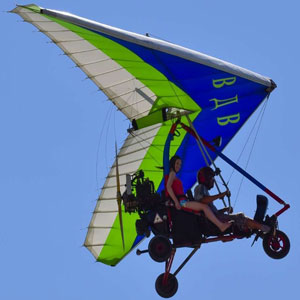
Weighing the options between trikes and three-axis machines often comes down to temperament. One pilot’s simplicity is another pilot’s boredom, but flex-wing trikes have a devoted following for good reason. Instead of elevators and ailerons, the pilot shifts their weight with the control bar while the wing’s own pendulum stability does the rest.
This creates a machine that is inherently forgiving. Gusts that would rattle a rigid wing are absorbed by the sail’s flex. Stalls are benign, and the landing roll is short. For a microlight wiki, the trike’s drag profile matters too, but the trade-off is a no-nonsense approach to flying that rewards relaxation over reaction speed.
Typical purchase decisions in South Africa often hinge on cost and storage. The rig is compact, assembly is quick, and maintenance rarely extends beyond the basics. The most common trike missions in the Winelands and Karoo include:
So while the fixed-wing crowd chases glide ratios, the trike pilot gets airborne with minimal fuss. For anyone updating a microlight wiki, that distinction is worth recording.
Powered Paragliders and Paramotors
Powered paragliders strap a motor to your back and treat your legs as landing gear. No runway, no hangar, no fuss. The entire rig costs less than a secondhand sedan in Johannesburg, which explains their spread across the Highveld. For South African pilots, they solve storage entirely, the whole rig fits in a car boot. A microlight wiki entry on paramotors should note their launch requirements, you need a clear field and calm wind, but no runway. Typical uses include:
- Crop surveying on small farms
- Wildlife counting in rugged bushveld
- Aerial photography along the coast
The stall speed is effectively zero, which makes them forgiving, yet the exposed prop demands respect. They trade range and weather tolerance for pure simplicity.
Gyrocopters and Rotorcraft Microlights
Gyrocopters occupy a curious space between helicopter and aeroplane. Their rotor blades spin freely in the airflow, driven by forward motion rather than engine power. This autorotation principle makes them remarkably stable in the turbulent thermals that stack up over the Highveld in summer. A proper microlight wiki entry on rotorcraft should highlight their short-field talent. Fifty metres of rough grass is enough on a calm morning.
Performance figures tell an honest story. The stall speed is effectively irrelevant because the rotor keeps producing lift as long as the machine moves forward. That forgiving character explains their popularity on game farms and remote properties where landing strips are scarce. Typical jobs rotorcraft handle:
– Pipe and powerline inspections across the Karoo
– Fence patrols on cattle and game ranches
– Long-distance crop spotting on maize estates
The trade-offs matter. Gyrocopters cannot hover, and they need forward speed to keep rotor energy in reserve. Pre-rotation checks demand discipline, the blades store significant inertia. Yet for South African pilots who want a capable cross-country machine without helicopter running costs, a gyrocopter delivers a satisfying balance. That is the real lesson recorded in any credible microlight wiki.
Electric Microlights: Emerging Trends
Electric propulsion is rewriting what pilots expect from the microlight wiki. The motor delivers maximum torque from standstill, a character that transforms takeoff performance at altitude. Johannesburg pilots, where density altitude erodes conventional power, notice the difference immediately.
Battery range remains the real constraint. The Highveld sun permits solar top-up at remote strips, but energy density still limits cross-country ambitions. Quiet operation makes electric microlights desirable for game reserve patrols, since engine noise spooks the animals. I have watched pilots land with full charge remaining after a morning patrol, something rare in the petrol era.
Some practical patterns are emerging:
- Quick-swap battery packs extend operational windows
- Thermal management demands attention in summer
- Regenerative braking recovers energy during descent
Getting Started with Microlight Flying
Licensing and Certification Requirements
South African regulations require at least 25 logged flying hours for a microlight licence, but most students realistically need 40 to feel confident. The process begins with a student pilot permit, which requires a medical certificate and passing an elementary radio telephony exam. Your instructor then builds your hours through structured dual and solo flights.
Every pilot follows the same procedural path:
- Complete the approved syllabus in aeronautical theory.
- Pass a written examination covering air law, meteorology, and navigation.
- Accumulate cross-country flight time under supervision.
- Undertake the final flight test with a designated examiner.
A reliable microlight wiki can clarify the specific Part 62 regulations, but the certification process ultimately rests on your hands-on consistency. The examiner wants to see smooth circuits, accurate landings, and solid decision making, not just hours on paper. Once your licence is issued, annual renewals and regular medical checks keep you current. For South African pilots, the path is well documented; the challenge lies in showing up to the airfield ready to learn.
Choosing the Right Training School
The gap between a school that issues hours and one that builds competence shows up quickly on a South African airfield. Walk the hangar line on a Saturday and watch the students. You will see relaxed hands on the controls, or you will see white knuckles and rushed radio calls. The difference is training quality.
Ask about instructor turnover before you ask about aircraft prices. A school that retains its instructors for years has a culture worth learning in. Then sit in on a ground briefing. Listen to how they explain airspace entry or crosswind technique. You want straightforward clarity, not performance.
- Inspect the maintenance schedule, not just the registration papers.
- Talk to current students about their solo progression without staff nearby.
- Book a trial flight and watch how the instructor handles the first ten minutes.
Your local microlight wiki lists the registered schools across the country, but the real filter happens in person. The school you choose shapes whether those 40 hours become a tedious requirement or a proper foundation for the sky.
Cost Breakdown: Purchase, Insurance, and Fuel
The purchase price is the least painful number on the invoice. A second hand fixed wing microlight might look like a bargain, but hangar fees and insurance premiums arrive monthly to correct that impression. South African airfields charge for space, and hull insurance for a two seat aircraft can run into the tens of thousands of rand each year, depending on your logged hours.
Fuel is the main recurring cost. A Rotax 912 burns roughly 15 litres of unleaded petrol per hour. A two stroke drinks more and demands premium oil mixed into the tank. The microlight wiki lists range and performance data, but your wallet supplies the real numbers when you fill up.
Annual line items include:
- Mandatory inspections and spare parts.
- Propeller repairs after gravel rash incidents.
- Batteries, tires, and brake pads.
Plan for surprises. Aviation maintenance has no sympathy for tight budgets.
Microlight Safety and Maintenance
Pre-Flight Inspection Checklists
Nearly thirty percent of light aircraft incidents stem from inadequate ground checks. In South Africa, where thermals build fast and airstrips hide behind koppies, pre-flight inspection is survival. The microlight wiki archives dozens of accident reports. Each one shares a thread: the pilot skipped a routine check.
Work a deliberate pattern before every flight. Walk the full perimeter, looking for cracks, loose bolts, and fuel seepage. Inspect control cables for fraying. Check the prop for nicks and the undercarriage for stress marks. Drain the sump and verify fuel quantity.
- Inspect the airframe for corrosion or stress fractures
- Check control surfaces and hinges for free movement
- Test throttle and brake resistance
- Secure harness buckles and quick-release pins
- Confirm radio charge and transponder function
Fifteen minutes saves you from a fifteen second emergency. The microlight wiki repeats this truth because pilots forget it. The Karoo sky does not grant second chances.
Common Mechanical Issues and Troubleshooting
Even the most disciplined pre-flight cannot forestall every mechanical fault. A Rotax that idles rough at highveld altitude, a trike nosewheel that shimmies on touchdown, these are the quiet betrayals that surface at altitude. The microlight wiki documents them all, from carburettor icing to cracked exhaust flanges, with field remedies that save lives.
Common culprits include:
- Fuel starvation from blocked vents or water ingress
- Ignition misfires traced to fouled plugs or failing HT leads
- Prop flange bolts working loose after hard landings
Symptoms always precede failures. A rough mag check on the ground beats a silent engine over the Magaliesberg. The microlight wiki exists for that exact moment, when your ears catch what your eyes missed.
Weather Conditions and Flight Planning
Weather planning in South Africa requires suspicion. A Highveld morning starts calm. By midday, cumulus clouds turn into thunderstorms that shorten your flight envelope. The microlight wiki treats every forecast as a suggestion, not a promise. Believe that.
Consider the following when planning a flight:
- Check wind shear reports at departure and destination elevations
- Understand how highveld density altitude degrades climb performance
- Plan for the afternoon thermal trigger when cloud build-ups turn hostile
Maintenance ties into this directly. A clean air filter and correctly tensioned radiator hoses may not save you from a berg wind, but they buy forgiveness when conditions tighten. Seasonal patterns and the mechanical checks they demand belong together.
Safety Gear and Personal Protection
Hangar talk fixates on engines. Your body is the only component without a backup, though. A rough strip and a Namibian midday sun punish the unprepared. The microlight wiki treats personal protection as non-negotiable, and rightly so.
I have seen pilots skip gloves to read the controls better. That trade prices seconds of feel against a lifetime of use. A certified helmet, UV400 sunglasses, and flame-resistant outer layers are cheap protection. Closed-toe boots with ankle support matter more than most think.
Carry this baseline:
– Full-face or open-face aviation helmet
– Shatterproof UV400 sunglasses
– Reinforced leather or textile gloves
– Flame-resistant long-sleeve clothing
Comfort matters. Your gear should fit before you need it to save you.
Storage, Hangaring, and Routine Servicing
Hangaring is the primary defence against the South African sun and highveld thunderstorms. I have watched good aircraft deteriorate in a single rainy season. The microlight wiki emphasises this repeatedly. UV degrades fabric wings, moisture attacks control cables, and heat accelerates seal failure.
Routine servicing follows a logical rhythm. Inspect the airframe for stress cracks around mounting points. Check the propeller for nicks. Lubricate throttle and brake cables. Flight hour logs stay current.
- Clean leading edges after every flight
- Inspect fuel lines for perishing
- Torque critical fasteners to spec
Storage and maintenance work together. A dry, shaded hangar extends component life. Servicing catches small issues before they become groundings.
Accident Statistics and Risk Mitigation
South African accident data shows human error, usually a loss of situational awareness in the circuit, drives over half of microlight incidents. Powerplant failure ranks second. The microlight wiki collects these records into a searchable archive that quietly reshapes pilot risk perception.
Accident statistics change flight culture only when pilots study them. Risk mitigation does not demand expensive avionics. I have seen pilots survive poor weather with nothing but disciplined routine. The microlight wiki reveals how often incidents share the same chain of decisions:
- Misreading fuel reserves when the strip appears close
- Pushing through marginal visibility to keep a schedule
- Dismissing a vibration that only appears at cruise power
Highveld flying teaches that small failures often stay hidden until they become critical. The archives preserve scattered accident reports, and those reports create a coherent picture of why flights end.
The Future of Microlight Aviation
Technological Innovations in Lightweight Materials
At current growth rates, graphene reinforced epoxy could halve wing weights within a decade. The next generation of microlight wiki entries will likely document a shift from aluminium tube frames to lattice structures printed from recycled polymers. South African builders already experiment with flax fibre composites, which dampen vibration better than glass and handle our heat with fewer fatigue cracks.
Pilots will soon face a peculiar problem: airframes so light that ballast becomes necessary for stable landings. Some prototypes embed sensor threads directly into sailcloth, while others use shape memory alloys to adjust camber mid flight. The tradeoffs are equally fascinating.
- Bamboo core sandwich panels cut material costs by 30%
- Self healing resin microcapsules patch minor cracks overnight
- Thermoplastic skins enable snap fit repairs at remote strips
These innovations demand new inspection habits from owners, but they reward with lower fuel burn and shorter takeoff runs. The forecast for this microlight wiki section points to featherweight aircraft that feel less like flying tractors and more like soaring kites with attitude.
Autonomous Systems and Microlight Drones
As airframes become lighter, the next logical step is handing control to machines that never tire. Autonomous microlight wiki sections will soon cover terrain following radar small enough to fit in a glove compartment. South African test sites already fly beyond visual line of sight with approved waivers. Pilots become supervisors, monitoring sensor fusion rather than wrestling control columns.
For microlight drones, the payload math changes completely:
– Crop surveys over maize fields now take twenty minutes instead of two days
– Anti poaching patrols track heat signatures without disturbing game
– Emergency medicine drops reach farmsteads during flooded roads
The regulatory landscape lags the hardware, but that gap is narrowing. The microlight wiki of tomorrow will probably read less like an aircraft manual and more like a robotics handbook.
Environmental Impact and Sustainable Fuels
I find the silence of a microlight engine running on sustainable fuel a strange comfort. Over South Africa’s Karoo plains, the future of flight may smell of used cooking oil and agricultural waste. Battery weight remains a limitation for longer ranges, but synthetic fuels and ethanol blends are improving rapidly. These powerplants burn cleaner, and the microlight wiki documents every incremental gain in efficiency. Noise pollution falls, carbon footprints shrink, and private airfields become less intrusive to neighbours.
Solar assist systems already extend endurance for electric trikes, and hydrogen cells are no longer laboratory fiction. Perhaps that is worth a pause! The coming decade will force fuel choices that respect both the sky and the ground beneath it.
Community, Events, and Global Regulations
Twenty Rotax engines starting in unison at a Karoo fly-in is a ritual no regulation has managed to dampen. Across southern Africa, the microlight community grows through informal networks, not institutional backing. The microlight wiki records the events, but the pulse lives in hangar conversations afterward.
Regulatory divergence complicates cross border travel. EASA has tightened its definitions, while South Africa’s CAA still applies the more permissive Part 96 framework. Pilots face exemptions that vary by region. One year, a weight shift trike is legal. The next, a paperwork delay grounds it.
- Harmonised licensing would simplify border crossings.
- Shared incident data would strengthen safety baselines.
- Common noise and fuel standards would reduce local friction.
The future of the sport sits with veterans mentoring newcomers over WhatsApp and clubs organising charity rallies. The microlight wiki simply annotates what happens when people decide to fly closer to the ground.