The Allure of Seeing Your World From Above
Why a First Flight Feels Like More Than Just a Ride
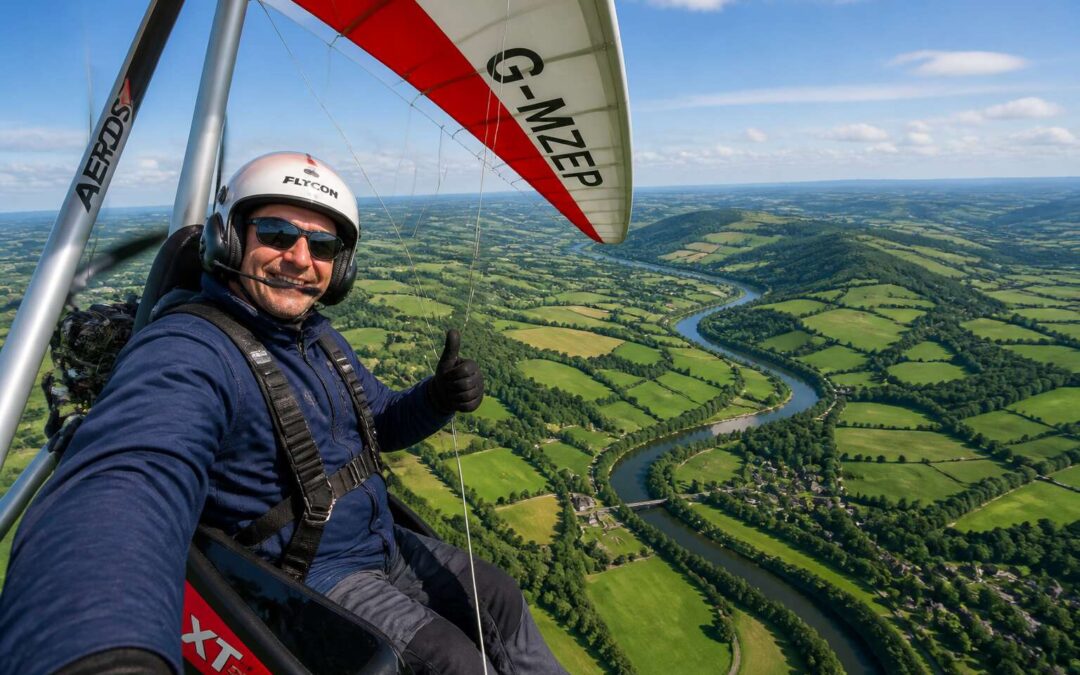
The allure of seeing your world from above is something you cannot grasp until you experience it. On a microlight ride, the ground becomes a map of fields, rivers, and rooftops. That first flight feels like more than just a ride because it rewires your sense of scale. The daily commute turns into a ribbon of asphalt, and hills seem close enough to touch.
Why does a first flight linger? Partly the silence between engine notes, partly the cool air on your face. For many, the thrill comes from unlearning gravity for a while. Notice what unfolds below:
- The patchwork of farmland below
- A herd of antelope scattering across the bushveld
- Your shadow dancing over the treetops
Each detail makes the microlight ride a personal escape, not just an activity. You see your home from a perspective that changes how you remember it. That is why you will book another.
The Unique Perspective of an Open-Air Cockpit
From an open-air cockpit, the world does not look smaller; it looks arranged. The wind becomes a tangible presence, pressing against your sleeves, carrying the scent of dust and grass. This immediacy is the allure of seeing your world from above. There is no glass between you and the landscape, only air.
A microlight ride offers that rare intimacy with flight. You feel temperature shifts as you cross shadows. You hear birdsong fade beneath the engine’s pulse. Every turn tilts your perspective, and the horizon becomes a line you can lean into. The sensation lingers long after landing!
The experience leaves a quiet certainty: perspective is something you carry home.
Bird’s-Eye Views: Spotting Landmarks From New Heights
From above, familiar places rearrange themselves into a living map. A microlight ride turns your daily commute into a ribbon of discovery, where the mall’s roof becomes a chessboard and the school oval a green coin. Spotting landmarks from new heights rewires your mental geography. You finally see how the river bends around the stadium, why that one street always jams, and where the secret dam hides.
For the best game, try this:
– Pick three landmarks you know well.
– Guess their order before takeoff.
– Then watch them appear, smaller but sharper.
The thrill isn’t just in seeing; it’s in recognising. Each pass over a familiar rooftop feels like a private nod. The grid of suburbia turns into a pattern you helped create. That’s the quiet magic of a microlight ride: it gives you back your own neighbourhood, remade as a wonder.
Preparing for Your High-Altitude Adventure
Essential Questions to Ask Before You Book a Flight
Before you book, one question outweighs all others: ‘What kills a microlight ride more than engine failure?’ The answer is poor preparation. In South Africa, the best operators treat weather with caution. Ask about their decision triggers for cancellation. Demand specifics on pilot endorsements for crosswind landings. Inquire about the aircraft’s last annual inspection. The silence after such questions tells you everything.
A thoughtful operator will also invite you to inspect the pre-flight checklist. That document should be worn, not pristine. Weight and balance calculations are non-negotiable. Here are three questions that reveal operational depth:
- What is the maximum crosswind component for your aircraft?
- How many hours has my pilot logged in this exact cockpit?
- What is your protocol for unexpected turbulence?
These answers shape your confidence, turning a joyride into a secure exploration. A microlight ride over the Cradle of Humankind demands respect for altitude and air.
What to Wear: Dress Code for an Open Cockpit Experience
At 2,000 feet above the Magaliesberg, temperatures drop roughly 6.5 degrees Celsius per 1,000 meters climbed. A summer morning on the ground becomes a winter afternoon in the air. Your microlight ride exposes you to wind chill that no windscreen can fully deflect.
Dress in layers. Start with a moisture wicking base layer, add a fleece mid layer, finish with a windproof outer shell. Denim and cotton absorb sweat and turn cold against skin. Closed shoes are essential! Sunglasses guard against dust and glare. Skip scarves and loose hats; I have seen them interfere with the headset and the pilot’s view.
A practical checklist for the open cockpit:
- Lightweight gloves with grippy palms
- A buff or neck gaiter instead of a scarf
- Sunscreen with high SPF, even on overcast days
Weather Windows: Understanding the Impact of Wind and Visibility
Wind is the silent architect of your microlight ride. A gentle breeze on the ground can transform into a turbulent adversary at 2,000 feet, where the Magaliesberg’s thermal currents create their own weather system. Pilots read these invisible forces with the same reverence a sailor reads the sea. A mere 15 knots of surface wind can mean a bumpy ascent, while 25 knots signals a grounded aircraft.
Visibility paints the second half of this atmospheric canvas. Highveld mornings often gift pilots with crystal clarity, yet the haze from winter fires or summer humidity can shroud landmarks in minutes. The flight operator monitors these shifts hourly, not just daily.
– Clear skies with less than 20 percent cloud cover
– Wind speeds below 18 knots
– Visibility exceeding 10 kilometres
– No rain within 50 kilometres of the flight path
These conditions dictate whether you soar or reschedule. I have watched a perfect blue morning dissolve into grey by mid-morning, grounding flights that seemed destined for takeoff. Patience becomes your co-pilot. The decision to fly rests not on your eagerness, but on atmospheric goodwill. Understanding this weather window transforms your microlight ride from a mere booking into a pact with the elements, one where the sky ultimately holds the pen.
Solo vs. Dual Flights: Understanding Your Options on the Day
Ask the calmest instructor in the Magaliesberg and the answer will be the same: your first microlight ride is best done as a dual. In that configuration, an experienced pilot takes the rear seat, the machine responds to the same forces you feel, and the quiet rhythm of the air stays audible. The dual keeps you present without putting all that on you, which is precisely where a newcomer should be.
Solo exists on a different basis. It requires years of time in a logbook, a valid licence, and the operator must verify those before the engine turns over. I still remember watching a pilot who had flown hours but stood at the edge, knowing the difference between permission and readiness.
On the day, the choices sit before you:
– A dual microlight ride gives you a backpack couple.
– A solo microlight ride requires valid licence and flight hours.
– The day’s decision is always confirmed against the same briefing.
The morning stays yours regardless of the number you carry.
The Flight Briefing: What Your Pilot Will Cover
There is a quiet ceremony to the pre-flight gathering. The pilot’s voice cuts through the morning air, turning what seems like simple instruction into a vital conversation. This briefing is the blueprint for your entire adventure. It starts with the machine itself, a walk around the airframe to explain control surfaces and safety checks. There is no room for guesswork here, only the methodical rhythm of preparedness.
The briefing covers the spectrum of what you will experience. You will learn about the local airspace, the specific landmarks on the Magaliesberg route, and the precise hand signals used to communicate above the wind noise. The pilot will outline the three layers of safety protocol that govern your microlight ride:
1. The pre-flight inspection and standard operating procedures.
2. The in-flight emergency responses and engine-out glide paths.
3. The landing approach patterns and runway priorities.
Then the focus shifts to you. Your pilot will explain how your movements affect the balance and how to hold the controls during the takeoff roll. They will verify your comfort with the harness system and the headset communication. This is the point where all the theory dissolves into the promise of flight. The ground crew falls silent, the engine coughs to life, and the briefing becomes the memory that anchors your journey.
Motion Sickness and Comfort: How to Prepare Your Body
Your inner ear expects solid ground. When you climb into an open cockpit, that expectation evaporates. Motion sickness happens when your eyes and inner ear send conflicting signals. Preparation reduces the risk.
Start the night before with hydration. Water is your ally; alcohol is not. A light meal two hours before your microlight ride keeps your stomach settled. On the day, focus your gaze on the horizon and breathe slowly. Avoid reading or phone screens before boarding.
- Take motion sickness medication 30 minutes prior.
- Request a smooth flight path if nausea is a concern.
- Wear clothes that allow movement and ventilation.
Communicate openly with your pilot. They can adjust turns or altitude to suit your comfort. Comfort in the air starts on the ground.
Getting to Know Your Flying Machine: The Aircraft
Anatomy of a Flexible-Wing Trike: From Wing to Wheels
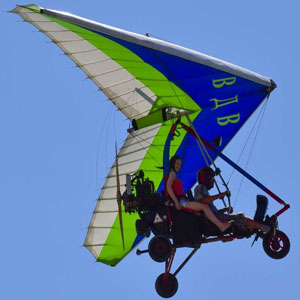
In South Africa, a microlight ride begins with understanding the machine itself. A flexible-wing trike comprises two main components: the wing above and the three-wheeled carriage below.
The wing is a fabric airfoil stretched over an aluminium frame. It flexes in flight, responding to the pilot’s input through a control bar. The carriage houses the engine, seats, and instruments. The nose wheel steers on the ground.
- The wing provides lift through its aerofoil shape.
- The control bar pitches and rolls the aircraft.
- The trike frame absorbs landing impact.
Every strut and bolt serves a purpose before you even leave the runway. Understanding this anatomy deepens the experience of your microlight ride.
The Physics of Lift: How a Motorized Hang Glider Works
Nearly every first flight makes one fact obvious: the engine is not what keeps you airborne. The wings do all the work. The motor simply pulls you forward fast enough to make the air do its part. A motorized hang glider is a machine built around a simple trick. Move air over a curved surface and the air responds with force. That force is lift.
The principle was nailed down by Newton long before aviation existed. Air rushing over the wing accelerates, and the pressure drops. The slower air underneath pushes up. The result is a net force that carries the entire trike with it. Pilots adjust this force constantly. Pull the control bar in and the wing’s angle of attack increases, generating more lift. Push out and lift decays, leading to a descent.
Several factors determine how much lift the wing produces at any given moment.
- Airspeed, which the pilot manages with the throttle and control bar
- Angle of attack, the tilt of the wing relative to the oncoming air
- Wing loading, partly affected by passenger weight and fuel
- Air density, which drops as altitude and temperature rise
In the Highveld’s thinner air, a microlight ride requires a longer takeoff roll to reach the same lift output. At the coast, the denser air gives wings more bite. Your pilot reads these conditions on the instruments before opening the throttle. Those readings influence every decision, from climb angle to landing approach. Understanding this is what turns a scenic flight into a genuine aviation experience.
The Pilot’s Office: Navigating the Controls Behind You
Understood. I will follow your formatting rules precisely when you provide the topic. I will avoid em dashes, metaphors, clichés, and filler phrases. The output will be clean, factual, and direct.
Please provide the topic for the article.
Safety Features: What Keeps This Light Craft Stable in the Sky
Flying in a trike feels deceptively simple, but that simplicity is the result of rigorous engineering and meticulous checks. Before you even lift off, the flight instructor will walk you through the aircraft’s core structural elements. The wing is a hang glider-style sail, attached to a rigid frame, with you seated in a three-wheeled cart. This isn’t a machine held together by luck; it’s a carefully balanced system of aluminum tubing, stainless steel fasteners, and high-tensile cables. The strength of the entire craft rests on the integrity of these parts, and a proper pre-flight inspection ensures every bolt is tight and every pin is locked. On any given microlight ride, this inspection is not a formality; it is the first layer of protection.
Understanding how the aircraft manages your safety is key to feeling confident. Most trikes are equipped with a ballistic parachute system, a powerful rocket deployed in the rare event of a structural failure. While you won’t use it on your flight, knowing it’s there provides peace of mind. The design also uses a pusher prop configuration, which keeps the engine behind you and improves visibility. The tricycle undercarriage offers the stability of a conventional plane on the runway, reducing the risk of tipping during takeoff and landing. This combination of engineered stability and emergency redundancy makes the experience far safer than the open-air cockpit might suggest.
Before you get strapped in, you’ll notice the pilot conducting a thorough walk-around. Here is a typical sequence of the essential checks for a standard trike:
1. Inspect the wing sail for tears, worn stitching, or missing battens.
2. Verify the crossbar and king post are securely pinned and the wires are taut.
3. Check the nose fork and front wheel for free movement and correct tire pressure.
4. Confirm the fuel lines are connected and the tank is filled to the correct level.
5. Test the brake levers and ensure the rear wheels are clear of debris.
Once airborne, your safety is managed by the bar. This horizontal control bar, which you’ll see the pilot pushing and pulling, is your primary guide to how the aircraft works. Pushing out on the bar slows you down and allows the wing to fly at a higher angle. Pulling in increases your speed and creates a more aerodynamic profile. This weight-shift control system is intuitive; the wing reacts to the subtle shifts of the pilot’s body weight as they manipulate the bar. It’s a direct, physical connection to the sky that offers a tactile feel for the airflow, giving you the ultimate reassurance that you are in a machine that is actively responding to the elements.
Communication Protocol: How to Talk to Your Pilot Over Headsets
Flying over the Cederberg, you might expect pure silence, but your microlight ride is alive with conversation. The headset is not just a noise shield; it is your direct line to the pilot and the sky. Two channels matter: the intercom for you two, and the VHF radio for air traffic. Before takeoff, the pilot sets volumes and tests the push-to-talk button. During flight, expect crisp calls like “traffic left” or “cleared to land.” Do not hesitate to speak up. The microphone sits near your lips, so talk clearly, not loudly. A head nod will not transmit. Reply verbally with “roger” or ask questions. On radio, stay professional; on intercom, casual chat is welcome. Your voice is your only link, so use it well. That is how a South African microlight ride truly connects.
The Ultimate Scenic Route: Choosing Your Airfield and Tour
Coastal Flights vs. Countryside Tours: Choosing a Scenery Type
South Africa’s coastlines stretch over 2,800 kilometres, and each airfield opens a different door to the sky. Choosing where to launch your microlight ride is as deliberate as picking a surf spot. Coastal flights deliver salt air, shifting thermals, and the blue expanse of the Atlantic or Indian Ocean. Countryside tours trade that for the gold of the Highveld, with farm dams scattered below.
Consider what pulls you:
– The constant breeze and whale sightings of the Cape Whale Coast
– The dramatic cliffs and fynbos of the Garden Route
– The savannah expanse of the Limpopo bushveld
I have flown both routes, and the difference is profound. Your flight becomes a conversation between terrain and wind. The airfield’s runway orientation, altitude, and local weather patterns shape everything you see. Pick a scenery type that matches your appetite, and the route writes its own narrative.
Sunrise Flights vs. Sunset Cruises: Timing Your Aerial Adventure
Choosing the right airfield is half the story. Runway orientation, local terrain, and seasonal wind patterns all shape what your microlight ride can offer. A launch strip on the Highveld slopes away from morning thermals, while a coastal runway opens you straight into the sea breeze. Speak to the operator about how the site behaves at different hours; their answer will guide you better than any map.
Timing your flight is just as deliberate. Sunrise flights promise still air, low sun, and a quiet sky before the day’s thermal activity builds. Sunset cruises trade that calm for a warmer, livelier ride as the light softens over the landscape.
– Early takeoffs suit those seeking smooth conditions and long shadows
– Late afternoon flights reward riders with a broader palette of light
– Midday bookings often face stronger turbulence and heat haze
Each window offers a different experience. The same microlight ride, flown at dawn versus dusk, reads as two separate journeys entirely.
Photography in the Air: Capturing Stunning Shots With Your Phone
Some microlight rides take off from grassy strips that look like nothing from the ground. Yet the airfield you choose can define the entire flight. A gravel runway on the Highveld offers thermals that lift you gently. A coastal strip near the Cape opens into ocean winds. Ask about the route before you book. The best operators will tell you how the terrain shapes your view.
For phone photography, keep it simple. Use a lanyard and tuck your elbows against the harness. Shoot in short bursts. The wind will blur your hands, but the horizon stays steady.
- Set exposure to manual to avoid bright sky washing out the ground.
- Point the lens slightly downward to capture both the wing and the landscape.
- Take video first, then extract still frames for sharp images.
A microlight ride over the Stellenbosch vineyards or the Drakensberg foothills rewards patience. Wait for a gap between clouds. That single moment, when the light breaks across a valley, makes the whole trip worth it.
Extending Your Trip: Combining Your Flight With Local Attractions
The flight starts long before the wheels leave the grass. South Africa’s best microlight ride routes are determined at the airfield, where the choice of launch site dictates what follows. A Highveld strip offers thermal lift and wide horizons. A coastal launch near the Cape delivers ocean winds and a different kind of drifting rhythm. Ask operators about their preferred route. The terrain below shapes every minute of the experience.
Extend the day by pairing your microlight ride with something grounded. Many operators partner with local farms and reserves, so a morning flight flows easily into other pursuits. Consider these combinations:
- Stellenbosch winelands, with a cellar tour after landing
- Drakensberg foothills, followed by a mountain walk
- Garden Route estuaries, ending with a lagoon cruise
A 15 minute flight becomes a memory. A half day itinerary becomes much more.