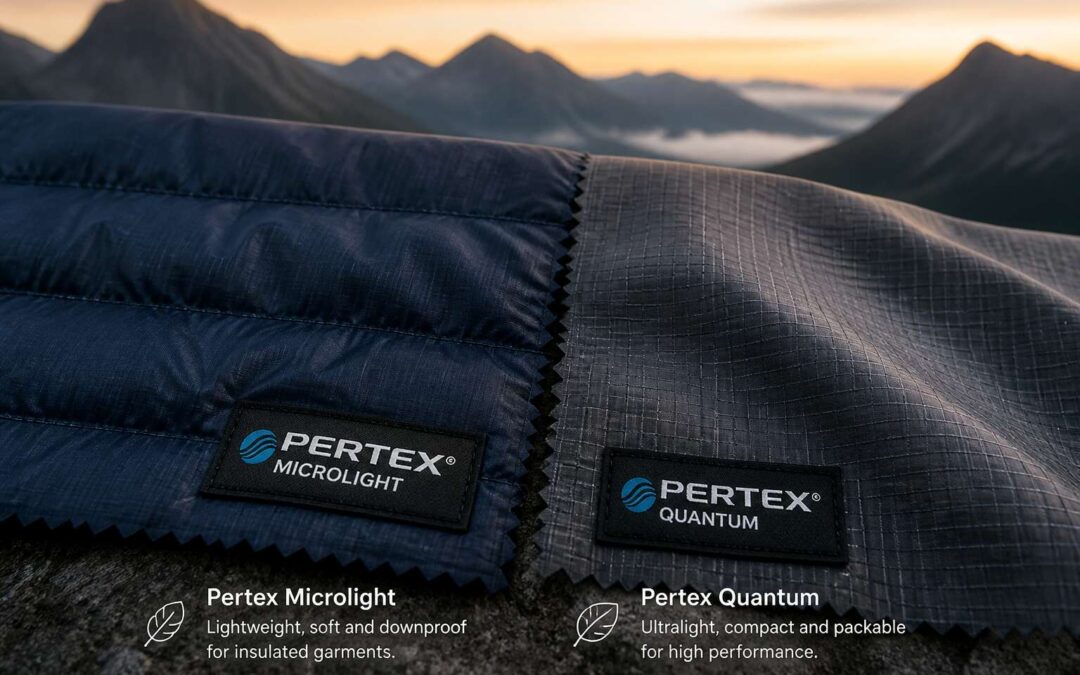
Understanding Pertex Microlight
Construction and Weave
Pertex Microlight’s construction begins with tightly woven nylon filaments, typically around 20 denier. This fine yarn creates a dense grid that blocks wind while allowing moisture vapour to escape. The weave itself deserves attention. A ripstop pattern, visible as small squares, prevents tears from spreading across the shell. This matters for South African adventurers navigating Karoo scrub or Cape winter squalls.
A durable water repellent finish adds protection, though the weave handles the core tasks. Consider what defines this construction:
- Thread count influences breathability more than fabric thickness.
- Ripstop reinforcement adds strength without excess bulk.
- DWR coating complements, but does not replace, the weave.
When exploring pertex microlight vs quantum, the microlight weave leans toward all-round performance rather than featherweight extremes. Its construction balances weight, packability, and weather defence, with every thread serving a clear purpose.
Weight and Packability
Forty grams per square metre. A single slice of bread weighs more. That comparison matters when you pack for a Drakensberg traverse, where every gram in your rucksack costs effort on the climb up.
Packability follows the same arithmetic. Pertex Microlight compresses into a stuff sack barely larger than a thermos. The pertex microlight vs quantum debate often pivots here. Quantum shaves grams and packs smaller, but Microlight offers a thicker hand feel and better resilience against snags.
- Weight: around 40 gsm versus Quantum’s usual 30 gsm
- Packed volume: compact, though not fist-sized
- Trade-off: resilience and warmth at a small weight cost
Cape Town coastal winds reward a lighter shell. The pertex microlight vs quantum call depends on your terrain. I find a Karoo night rewards the extra substance.
Ideal Applications
Pertex Microlight is built for the places where a trail stops being polite. The Drakensberg’s basalt gullies, the Cederberg’s sandstone slabs, and the Cape’s fynbos corridors all punish thin fabrics. Microlight’s denser face fabric withstands these encounters. The pertex microlight vs quantum question is really about whether you need that extra resilience.
For a weekend traverse or a winter evening in the Karoo, Microlight blocks the wind, holds warmth, and survives a scrape against rock without showing a mark. On most South African trails, the pertex microlight vs quantum trade off favours Microlight. Quantum saves grams, but Microlight handles the terrain.
Understanding Pertex Quantum
Construction and Weave
The Pertex Quantum fabric reveals its character through yarn density and weave architecture. Where Microlight offers a relaxed, forgiving construction, Quantum employs a tighter calendered face that reduces air permeability while preserving drape. The difference is tangible when you hold both shells side by side!
Consider the technical distinctions:
– Quantum weaves 7 denier filaments, a gossamer-thin yarn that demands precise tension control during production.
– Microlight’s coarser weave allows loft to migrate through the shell, aiding warmth but increasing air flow.
This weave architecture also influences how the DWR finish adheres, and that relationship changes after repeated wetting and drying cycles in the Highveld’s unpredictable weather. The pertex microlight vs quantum decision ultimately rests on these micro-level choices.
Weight and Packability
Pertex Quantum weighs around 35 grams per square metre. That figure sits at the lighter end of the shell spectrum, and it changes how you pack. For a multi-day traverse in the Drakensberg, every gram matters.
I have packed both shells side by side. The weight translates directly to packability. A Quantum jacket folds into a volume the size of a fist. Microlight, with its coarser weave, takes up more space. The pertex microlight vs quantum choice becomes obvious when your backpack is already full.
Consider what this means in practice:
- Quantum compresses without forcing. The fabric does not resist packing.
- The shell springs back with minimal creasing.
- Pack weight drops by a measurable margin compared to Microlight.
For the Highveld hiker, these grams and millilitres determine what goes in the pack.
Tear Strength and Durability
Tear strength is where Pertex Quantum earns its keep. The ripstop grid, a lattice of thicker threads woven into the base fabric, stops small snags from becoming gaping wounds. In the Drakensberg, scraping against sandstone won’t end your trip. The pertex microlight vs quantum debate often hinges on this exact point. Microlight’s plain weave feels tougher to the touch, but it lacks that ripstop interruption. A tear, once started, runs further.
The numbers reveal the difference:
- Quantum’s grid disperses force across multiple threads, halting propagation.
- Microlight relies on its denser base weave for abrasion resistance.
Abrasion resistance works differently. Microlight handles repeated rubbing against pack straps better. Quantum handles punctures and branch strikes better. I have patched both on trail, and the failures tell the story. Pick your enemy: sharp rock or rough webbing. That is the real pertex microlight vs quantum decision.
Ideal Applications
A 20-degree temperature drop in the Maluti mountains can arrive before lunch. Pertex Quantum exists for that moment. This is not a fabric for idle strolls. It is a fabric for the exposed ridge, the sudden squall, the summit push where conditions turn hostile without warning. I know this firsthand from Lesotho’s high passes!
The pertex microlight vs quantum debate often misses a simple truth: each fabric has a designated terrain. Quantum belongs to the technical arena.
Scenarios where Quantum earns its place:
- High-velocity ascents in the Cederberg where a gram saved is energy kept
- Winter traverses in the Drakensberg requiring a shell that disappears into a pack
- Alpine-style climbs where the jacket stays stowed until conditions demand it
The pertex microlight vs quantum choice makes sense when you match the shell to the objective. Quantum is the specialist. Microlight is the generalist.
Comparing Performance Metrics
Weight: The Crucial Difference
Gravity charges a fee for every gram you carry, and your legs settle the bill. In the pertex microlight vs quantum comparison, weight is the performance metric that dictates how your body holds up at kilometre 20. Microlight offers a sturdy feel with a measurable mass penalty. Quantum strips that weight away, and the performance benefit appears in the numbers. The payload difference compounds over distance. The metrics that matter:
- Mass per square metre of fabric
- Energy expenditure on sustained climbs
- Pace retention over multi-day routes
Quantum’s reduced load means less vertical force applied to each stride. This is a real advantage when facing the rocky gradients of the Cederberg or the switchbacks of the Drakensberg. The technical weight difference looks small, but the cumulative effect on performance is decisive.
Breathability and Comfort
Breathability is the quiet metric that decides whether your trail day ends in comfort or persistent dampness. In the pertex microlight vs quantum comparison, the two fabrics diverge sharply here. Microlight’s tighter weave restricts air movement, so it holds heat close. That warmth becomes a burden when your pace rises and sweat accumulates. Quantum, by contrast, uses a more open structure to release heat and moisture vapour quickly. On a summer traverse of the Boland mountains, I feel the difference within minutes.
The measurable factors reinforce this experience:
- Moisture vapour transmission rate: Quantum leads.
- Drying time after a rain shower: Quantum recovers faster.
- Contact against skin: Microlight feels more substantial, Quantum feels minimal.
Neither fabric wins outright. The better choice depends on your tolerance for heat retention versus your need for rapid ventilation. Comfort is your own equation.
Weather Resistance
Rain on Table Mountain arrives without warning. That is where pertex microlight vs quantum shows its true character. Microlight carries a water column rating around 1500mm, enough for light drizzle but not a proper Cape southeaster. Quantum resists water more aggressively through its dense face yarns, although neither fabric relies on a membrane.
The split becomes obvious after the storm passes. Keep an eye on these measurable differences:
- Initial water beading: Quantum holds surface tension longer
- Wetting out speed: Microlight saturates sooner
- DWR resilience after repeated wind whip: Quantum
Wind, not rain, often decides the outcome. Quantum’s construction blocks cold gusts while preserving its breathable character. Microlight gives in faster to steady wind pressure, letting the chill seep through on exposed ridges.
Durability vs. Lightweight Trade-off
Every gram saved on your back costs something in the pertex microlight vs quantum comparison. Microlight wins the weight game. Quantum counters with a fabric that endures more seasons of rough use. That trade-off becomes personal the moment you feel the difference in hand.
The real measurement is how you treat your gear. A scrambler in the Magaliesberg brushes against rock all day. A trail runner on the coast carries their jacket, not tests it. One needs Quantum’s resilience. The other can live with Microlight’s lighter hand feel. The pertex microlight vs quantum choice hinges on your compromise between grams and grief.
I weigh my own choices this way:
- How many days will this jacket spend in a pack?
- How often will I be forcing through fynbos?
- How much do I care about those saved grams?
Price and Value
Price is where the pertex microlight vs quantum comparison turns personal. Quantum commands a premium because it is engineered for precise gram targets. Microlight asks for less cash and delivers a fabric that absorbs abuse without complaint. Value is not the number on the tag. It is the cost per trip, the rand per kilometre of trail.
Ask yourself what you are actually funding:
– A Quantum shell for summit bids where every gram matters.
– A Microlight jacket for weekend kloofing when the budget also needs biltong and cold beer.
The cheaper option only wins if it survives the rocks. The expensive one only wins if you carry it out of the garage. The pertex microlight vs quantum equation is less about specs and more about your own follow through.
Making the Right Choice for Your Gear
Ultralight Backpacking Considerations
The Karoo night arrives with a chill that tests the seams of lesser gear, and the Drakensberg escarpment teaches the unprepared a hard lesson. For the ultralight backpacker, the choice between pertex microlight vs quantum is a negotiation with the trail ahead, not a calculation of specifications. Each fabric answers a different question about how you endure the wild.
Consider the circumstances of your route before committing.
- Are you moving through dry, wind-scoured passes where breathability matters most?
- Do you expect the cold, damp air of a coastal forest where moisture gathers without rain?
- Will your pack endure sharp rock and thorny scrub, or does it rest mostly against your back?
The correct answer is rarely found in a spec sheet. It is found in the weight you are willing to carry and the comfort you refuse to surrender.
Casual and Everyday Use
The city asks a different question than the mountain. For casual wear in Johannesburg or Cape Town, the pertex microlight vs quantum choice comes down to how you move through ordinary hours. Morning wind, afternoon sun, a sudden evening drizzle. You want a layer that disappears when you forget about it.
I have worn both fabrics on commutes and long weekends. Microlight feels softer against the skin. Quantum has a firmer hand and holds its shape better. Neither belongs at a formal dinner, but both suit a walk to the bakery or a coastal drive.
Everyday use brings its own demands:
- How often you fold it into a daypack.
- How much friction it takes from seatbelts and handbags.
- How quickly it vents when the sun breaks through.
The honest test is simple. Pick the one you reach for without thinking. That settles the pertex microlight vs quantum argument faster than any spec sheet.
Mountaineering and Alpine Conditions
On the high escarpment, the wind does not ask for your opinion. It arrives at first light with a voice that moves through rock and sinew. Choosing between pertex microlight vs quantum for mountaineering means deciding which fabric you will trust when the air thins and the route turns serious.
Microlight drapes against the body with immediate softness. Quantum offers a firmer presence, a steady companion for exposed ridges and long hours against granite. In alpine conditions, small differences become significant. The layer you pull from your pack before dawn is the one you live inside until the sun finally strikes the summit.
Consider the mountain you are climbing, not the one in your imagination.
- What wind speeds wait on the exposed sections?
- How much freedom of movement does your technique demand?
- What does your existing layering system require beneath?
The pertex microlight vs quantum decision is no victory for either side. It is a quiet negotiation with the conditions you know are coming, and the gear you choose becomes part of that agreement.
Down Jacket Shells
Most outdoor enthusiasts will buy three down jackets in their lifetime, yet only one will be chosen with genuine self-knowledge. The pertex microlight vs quantum comparison forces you to confront how you actually use your gear, and most people avoid that confrontation.
I have stood on Cape Town’s Table Mountain when the south-easter exposed every weakness in my layering system. That is the moment fabric choice stops being theoretical. The shell of your down jacket sits between your body and the mountain, and its behaviour under stress reveals your priorities.
Before you compare weights or weaves, examine your own routines:
- Do you pack your gear in a rush or with deliberate care?
- Do you inspect your jacket for wear after every trip?
Your answers determine where you stand in the pertex microlight vs quantum debate, and which fabric you will trust when the wind arrives!
Quilts and Sleeping Bags
Sleep strips away pretence. I have spent nights at Sani Pass with frost forming on the flysheet, and in those hours you discover what your quilt actually offers. The shell fabric becomes a second skin, and the pertex microlight vs quantum decision reveals itself in the small hours.
Microlight on a quilt feels domestic, like a well-worn pillowcase. Quantum feels technical, letting you rotate inside the bag without resistance. Neither is wrong, but each changes your sleep posture and your dreams.
Observe your body at night:
– Do you burrow under the fabric?
– Do you kick the footbox open?
– Do you wake with the shell twisted around your neck?
Your nocturnal habits determine where you stand in the pertex microlight vs quantum debate, long before pack weight enters the conversation.
Long-Term Care and Maintenance
Choosing between Pertex Microlight vs Quantum often comes down to how you treat your gear after the trail ends. The fabric remembers everything. Microlight rewards gentle handling, while Quantum forgives a degree of neglect, but neither survives indifference.
Wash your shell with a technical cleanser, never fabric softener. Store it loose, never compressed. Reapply a durable water repellent when the beading fades. These steps extend the lifespan of both weaves.
- Inspect zips and seams after every trip.
- Dry wet gear completely before storage.
- Keep heat sources well away from the fabric.
The right choice today becomes the right choice for years, provided you respect the material. In the South African highlands, where the sun and altitude test every stitch, a simple ritual of care decides which fabric serves you longer. The question, ultimately, answers itself with time.